 -
-Busy small business owners know that even one missing detail in a contract can create costly problems down the road. Finding affordable legal solutions is becoming a global priority, with thousands searching each month for reliable american templates that do not break the bank. Understanding how to choose, customize, and safely store legal forms gives you control over your business and saves you from unnecessary attorney fees.
Table of Contents
- Understand The Purpose Of Each Legal Form
- Choose The Right Template For Your Needs
- Customize Forms For Your Specific Situation
- Check For Required Legal Clauses And Language
- Use Clear And Simple Terms In Every Document
- Review And Update Forms Regularly
- Store And Share Your Legal Forms Safely
Quick Summary
| Takeaway | Explanation |
|---|---|
| 1. Understand Legal Structures | Choose the right legal form to protect personal assets, manage taxes, and enhance operational flexibility. |
| 2. Select Appropriate Templates | Use reliable templates that align with your business needs and comply with local laws to minimize legal risks. |
| 3. Customize Legal Documents | Tailor templates to reflect your specific industry and business model, ensuring comprehensive legal protection. |
| 4. Include Critical Clauses | Essential clauses like indemnification and confidentiality prevent misunderstandings and provide liability protection. |
| 5. Conduct Regular Reviews | Regularly update legal documents to reflect changes in laws or business operations to avoid compliance issues. |
1. Understand the Purpose of Each Legal Form
Choosing the right legal form is foundational for small business success. Your business structure determines critical aspects like personal liability, taxation, and operational flexibility.
Every business owner needs to understand how different legal forms impact their venture. Business organization structures range from sole proprietorships to complex corporate entities, each with unique advantages and limitations.
Key Considerations for Legal Form Selection:
- Liability Protection: Corporations and LLCs shield personal assets from business debts
- Tax Implications: Different structures trigger different tax treatments
- Ownership Complexity: Some forms limit ownership transfer more strictly than others
- Operational Flexibility: Certain structures allow easier management and scaling
For small businesses, the most common legal forms include sole proprietorships, partnerships, limited liability companies (LLCs), and corporations. Each structure offers distinct benefits depending on your business goals, risk tolerance, and growth plans.
Pro Tip: Consult with a business attorney or tax professional before finalizing your legal form to ensure you select the most advantageous structure for your specific business needs.
2. Choose the Right Template for Your Needs
Selecting the appropriate legal document template is a critical step for small business success. Not all forms are created equal, and using the wrong template can lead to significant legal complications.
Business owners must carefully navigate legal form template categories that span different subjects and jurisdictions. Understanding which template matches your specific business needs prevents potential legal risks and ensures regulatory compliance.
Key Template Selection Criteria:
- Jurisdiction Specificity: Verify the template aligns with your state and local regulations
- Business Type Relevance: Match templates to your specific business structure
- Comprehensive Coverage: Ensure the template addresses all necessary legal requirements
- Customization Potential: Look for templates that allow easy modification
Templates from reliable sources like the Small Business Administration provide standardized frameworks that can be tailored to your unique business requirements. These documents serve as foundational tools for establishing legal protections and operational guidelines.
Pro Tip: Cross reference your selected template with local legal requirements and consider having an attorney review the document to confirm its comprehensive coverage and applicability to your specific business scenario.
3. Customize Forms for Your Specific Situation
Generic legal documents rarely capture the nuanced complexities of your unique business environment. Legal document customization transforms standard templates into powerful tools tailored precisely to your operational needs.
Small businesses must recognize that one size does not fit all when it comes to legal forms. Your industry, location, business structure, and specific risk profile demand strategic modifications to standard templates.
Key Customization Strategies:
- Industry Specific Clauses: Add provisions unique to your business sector
- Risk Management Language: Incorporate protective terminology that addresses your specific vulnerabilities
- Location Based Requirements: Adjust documents to meet local regulatory standards
- Operational Scope: Modify terms to reflect your exact business model and service offerings
The Small Business Administration recommends thoughtful adaptation of templates to ensure they genuinely represent your business interests. This means carefully reviewing and adjusting standard language to create documents that provide meaningful legal protection.
Pro Tip: Before finalizing any customized legal document, have an attorney review the modifications to ensure they provide comprehensive protection and remain legally enforceable.
4. Check for Required Legal Clauses and Language
Not all legal language is created equal. Understanding and implementing critical contract clauses can be the difference between a robust legal document and a potential liability nightmare.
Every business document requires specific language that protects your interests while clearly defining obligations and expectations. These essential clauses serve as your legal safeguard against potential misunderstandings and future disputes.
Critical Clauses to Include:
- Identification of Parties: Clearly define who is involved in the agreement
- Offer and Acceptance: Explicitly state terms of agreement
- Payment Terms: Outline precise financial expectations and conditions
- Confidentiality: Protect sensitive business information
- Warranty: Define product or service guarantees
- Indemnification: Establish liability protections
- Termination Conditions: Specify exit strategies and contract dissolution
Business owners must approach legal language with precision. Each clause should be carefully crafted to address specific operational risks and provide comprehensive protection.
Pro Tip: Create a standard clause checklist for your business and review every document against it to ensure no critical protections are accidentally omitted.
5. Use Clear and Simple Terms in Every Document
Complex legal jargon can transform a straightforward agreement into a confusing maze of incomprehensible language. Legal writing demands clarity that allows every party to understand their rights and responsibilities without confusion.
Small business owners must prioritize plain language in their legal documents. Complicated terminology does not make a document more professional it makes it less effective and potentially unenforceable.
Strategies for Simple Legal Language:
- Active Voice: Write sentences that clearly state who does what
- Short Sentences: Break complex ideas into digestible statements
- Avoid Legal Jargon: Replace complicated terms with everyday language
- Define Specialized Terms: Provide clear explanations for any technical language
- Use Consistent Terminology: Choose one term and stick with it throughout the document
- Read Aloud: Test document clarity by hearing how it sounds
- Get Feedback: Ask someone outside your industry to review the document
Effective legal documents communicate precisely. Your goal is to create an agreement that is legally sound and universally understandable.
Pro Tip: Create a personal glossary of plain language alternatives for common legal terms to help you consistently translate complicated language into clear communication.
6. Review and Update Forms Regularly
Legal documents are not static artifacts but living instruments that must evolve with your business. Legal form updates protect your business from potential legal vulnerabilities and ensure ongoing compliance.
Changes in law, business structure, regulatory requirements, or operational processes can quickly render existing documents obsolete. Proactive document maintenance is your first line of defense against potential legal complications.
Key Review Strategies:
- Annual Audit: Schedule comprehensive document review every 12 months
- Track Regulatory Changes: Monitor legal requirements in your industry
- Update Contact Information: Verify all party details remain current
- Reassess Business Structure: Reflect organizational changes in documents
- Remove Outdated Versions: Eliminate old or superseded forms
- Maintain Digital and Physical Copies: Create secure backup systems
Businesses that treat legal documentation as a dynamic process significantly reduce their risk of unexpected legal challenges. Consistent review demonstrates professional diligence and commitment to operational excellence.
Pro Tip: Create a digital calendar reminder system that alerts you to scheduled document reviews and tracks upcoming renewal or update requirements for each critical legal form.
7. Store and Share Your Legal Forms Safely
Your legal documents are more than just paper they are the lifeblood of your business’s legal protection. Legal document storage platforms provide secure mechanisms for protecting your most sensitive business information.
Businesses must implement robust strategies to safeguard legal forms from potential breaches, loss, or unauthorized access. Digital and physical storage each require careful consideration to maintain document integrity.
Secure Storage Best Practices:
- Digital Encryption: Use password protected and encrypted digital storage
- Backup Systems: Create multiple secure backup copies in different locations
- Access Controls: Limit document access to authorized personnel only
- Physical Security: Store paper documents in locked fireproof containers
- Secure File Sharing: Use encrypted platforms for document transmission
- Regular Audits: Periodically review and update storage protocols
- Cloud Storage: Select reputable services with strong security credentials
Protecting your legal documents is not just about preventing loss it is about maintaining the operational continuity and legal standing of your business.
Pro Tip: Implement a comprehensive document management system that automatically tracks document versions, access logs, and provides granular permissions for sharing and viewing sensitive legal forms.
Below is a comprehensive table summarizing the strategies for effectively managing legal forms and documents for small businesses as discussed in the article.
| Topic | Key Actions | Benefits |
|---|---|---|
| Understand the Purpose of Legal Forms | Assess different business structures (e.g., sole proprietorship, LLC). Evaluate factors like liability, taxation, and flexibility. | Enables informed decisions tailored to business needs. |
| Choose the Appropriate Template | Ensure templates comply with jurisdictional regulations and fit the business type. Use templates from trusted sources, customizing as necessary. | Avoids legal complications and ensures precise alignment with requirements. |
| Customize Legal Forms | Modify standard templates to incorporate industry-specific clauses and local requirements. Adjust for operational scope. | Enhances document relevancy and strengthens legal protections. |
| Check for Key Clauses | Include fundamental terms such as parties involved, confidentiality, and termination conditions. Prepare a checklist. | Prevents legal uncertainties and ensures comprehensive coverage. |
| Use Clear Language | Preference active voice and simple terms. Define any specialized vocabulary within the documents. | Improves understanding and enforceability of agreements. |
| Review and Update Forms Regularly | Conduct consistent assessments to align with evolving regulations and business changes. | Mitigates risks and maintains compliance. |
| Securely Store and Share Documents | Apply encryption and secure backups for digital copies. Utilize authorized access controls. | Protects sensitive information and ensures operational continuity. |
Simplify Your Legal Form Needs for Small Business Success
Navigating the complexities of legal forms can be overwhelming as a small business owner. From selecting the right legal form and customizing templates to ensuring clear language and necessary clauses every step matters in protecting your business and supporting growth. If you want to remove guesswork and create customized, legally sound documents without hassle you need a trusted resource by your side.
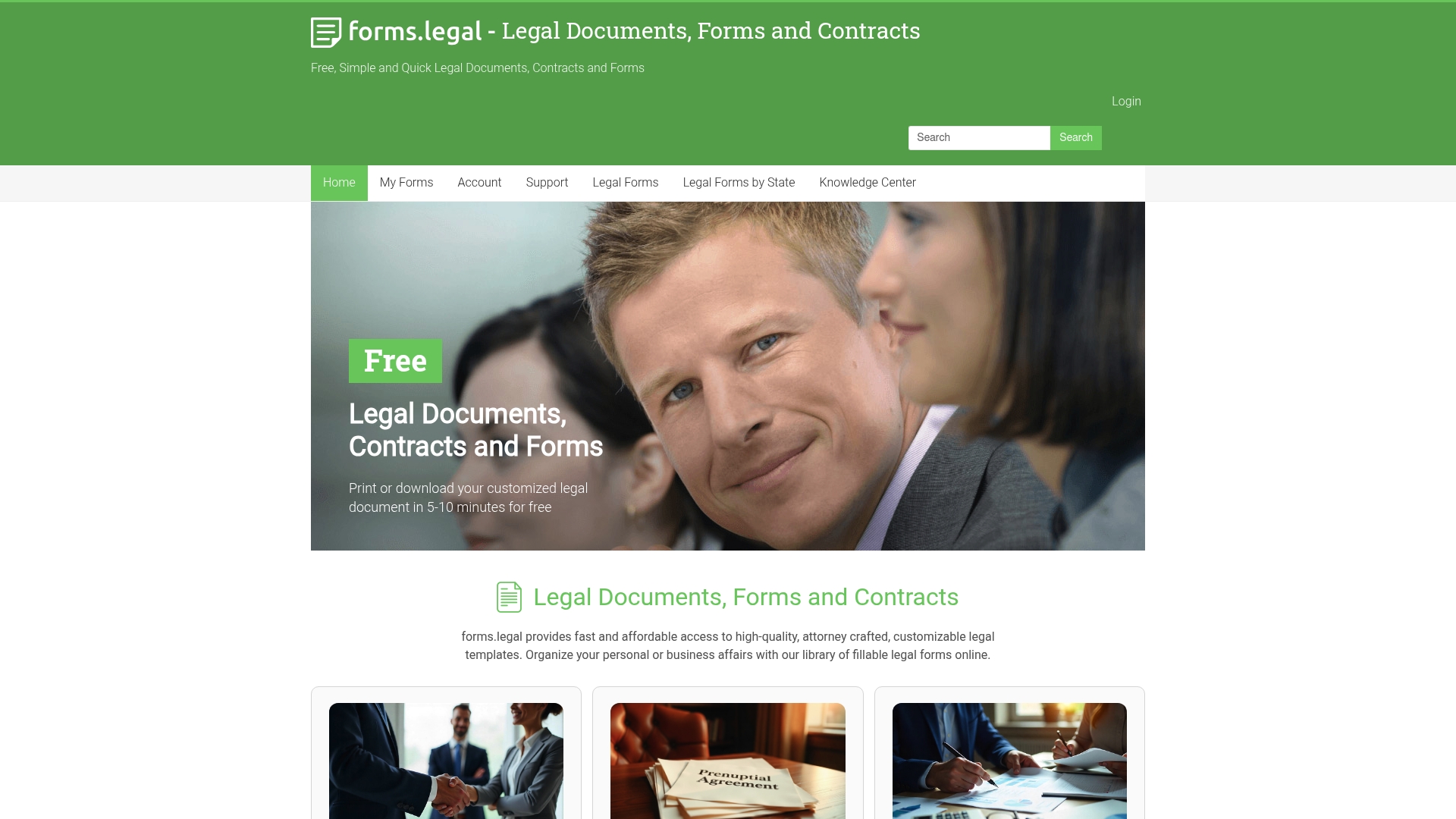
Take control now with forms.legal, a platform offering easy access to attorney-crafted, customizable legal forms designed specifically for small businesses. Whether you need partnership agreements, contracts, or liability protections you can quickly adapt templates to your situation and maintain compliance effortlessly. Don’t risk errors or outdated paperwork when securing your business’s future is critical. Visit forms.legal to start creating clear, comprehensive legal documents today and keep your small business protected as it grows.
Frequently Asked Questions
What is the most important legal form for a small business?
Choosing the right legal form, such as a sole proprietorship, partnership, LLC, or corporation, depends on your specific business needs. Assess your goals, risk tolerance, and tax implications, and then consult a business attorney to finalize your choice.
How do I choose the correct legal document template for my business?
Selecting the appropriate legal document template requires matching it to your business structure and jurisdiction. Review various template categories and ensure that the template addresses your specific requirements and complies with local regulations.
What should I include when customizing my legal forms?
Customize your legal forms by adding industry-specific clauses, risk management language, and local regulatory requirements. Ensure the terms accurately reflect your business model to provide robust legal protection.
Why is it necessary to regularly review and update my legal documents?
Regularly reviewing and updating your legal documents helps maintain compliance with changing laws and protects your business from legal vulnerabilities. Schedule an annual audit and check for potential updates triggered by changes in your business structure or regulatory environment.
How can I effectively store and share my legal forms?
To effectively store and share your legal forms, implement secure methods like encrypted digital storage and limited access controls. Regularly review your storage protocols to safeguard sensitive information from unauthorized access.