 -
-More than half of American small business owners rely on free legal forms when drafting contracts and essential paperwork. The search for affordable and speedy legal solutions is a familiar challenge, especially for those who want results without hiring an attorney. Understanding what free legal forms offer, separating fact from myth, and knowing how to use them effectively will empower you to handle legal documents with confidence and avoid common risks.
Table of Contents
- Defining Free Legal Forms And Common Myths
- Types Of Free Legal Forms Available Online
- How Customization And Downloading Works
- Legal Validity And Jurisdiction Concerns
- Comparing Free Forms With Paid Or Attorney Services
- Risks, Limitations, And Best Practices
Key Takeaways
| Point | Details |
|---|---|
| Understanding Limitations | Free legal forms serve as templates but require careful customization for specific legal contexts. |
| Professional Review is Essential | Always consult a legal professional to ensure compliance with local regulations and specific business needs. |
| Jurisdiction Matters | Legal validity varies by jurisdiction; ensure forms meet local legal requirements for enforceability. |
| Use as Starting Points | Free forms can be useful as drafts, but complex situations warrant professional legal assistance for comprehensive protection. |
Defining Free Legal Forms and Common Myths
Free legal forms are standardized template documents that provide a prescribed structure for drafting legal documents quickly and efficiently. These documents typically include blank spaces where users can input specific personal or business information, allowing individuals and small businesses to create legally relevant paperwork without significant financial investment. Legal forms offer a structured framework that helps streamline document creation across various contexts.
Contrary to popular misconception, free legal forms are not universal solutions that automatically guarantee legal protection. While they provide a foundational template, these documents require careful customization and understanding of specific legal contexts. Small business owners must recognize that generic forms cannot replace professional legal counsel, especially for complex situations involving nuanced contractual relationships or jurisdiction-specific requirements.
The primary myths surrounding free legal forms include the belief that they are always legally binding, completely interchangeable, and applicable across all scenarios. In reality, legal forms vary significantly based on jurisdiction, specific use case, and the particular legal context. Standardized legal materials require comprehensive understanding of the underlying legal framework to ensure proper implementation and effectiveness.
Pro tip: Always review free legal forms with a qualified legal professional to ensure they meet your specific business requirements and comply with local regulations.
Types of Free Legal Forms Available Online
Free legal forms available online encompass a wide range of documents designed to meet diverse business and personal legal needs. Primary legal document categories include transactional forms, contractual agreements, court-related documents, and specialized templates that cater to specific legal requirements. These forms range from simple fill-in-the-blank templates to more complex documents addressing nuanced legal scenarios for small businesses and individuals.
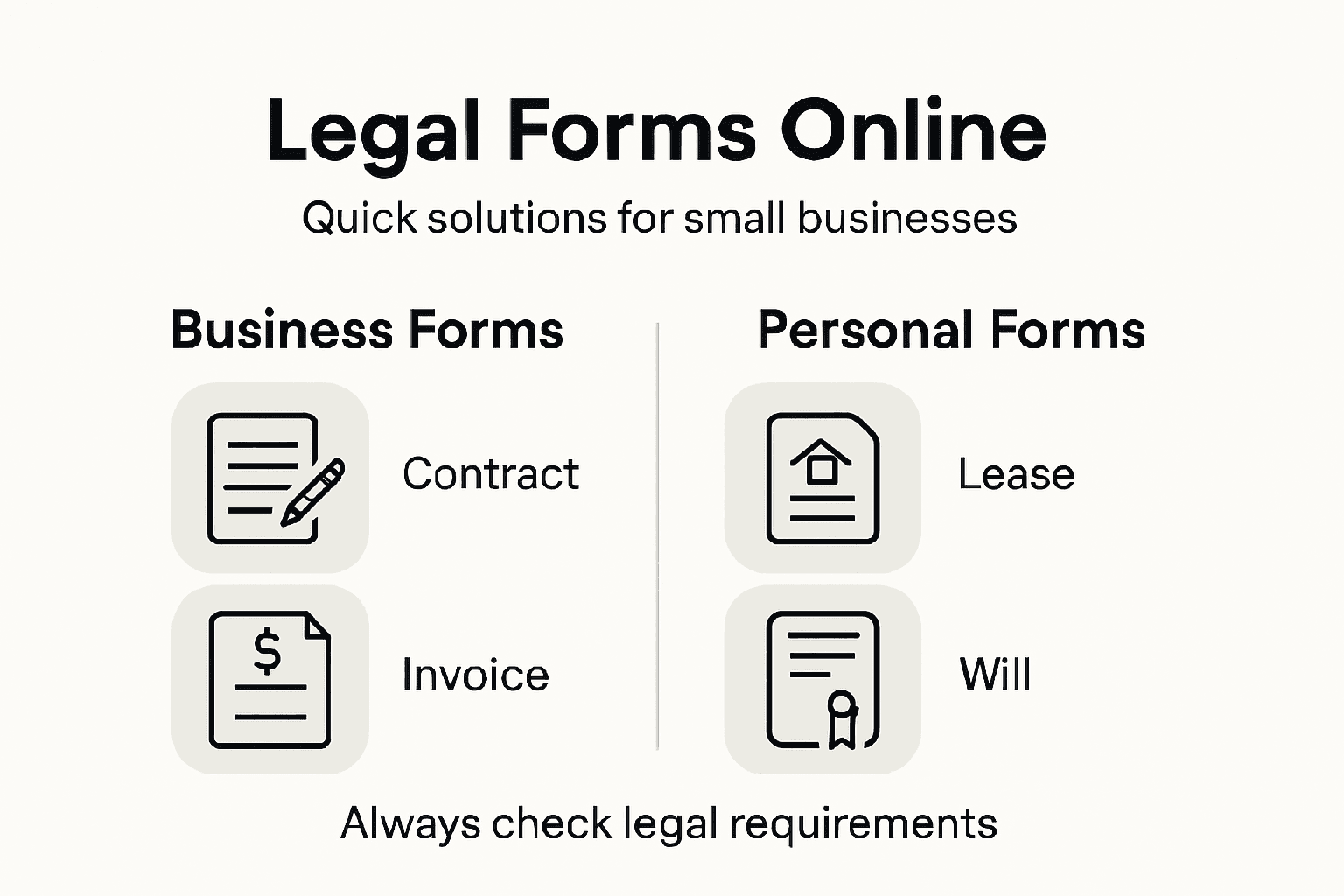
The most common types of free legal forms online can be broadly classified into several key categories. Transactional forms include critical business documents such as sales agreements, non-disclosure agreements, employment contracts, and partnership documents. Litigation-related forms encompass pleadings, motions, complaints, and other court-related paperwork. Personal legal forms cover essential documents like wills, power of attorney, lease agreements, and property transfer documents.
Legal document databases typically offer specialized form collections that address specific needs across different jurisdictions. These may include industry-specific contracts for technology, real estate, freelance work, consulting, and small business operations. Some platforms provide state-specific forms that account for local legal requirements, ensuring greater accuracy and compliance for users seeking jurisdiction-specific legal documentation.
Pro tip: Always verify the currency and legal validity of free online forms by cross-referencing with current local regulations and consulting a legal professional when dealing with complex legal matters.
Here’s a summary comparing key resources for legal documents:
| Platform Type | Customization Ease | Document Scope | Jurisdiction Support |
|---|---|---|---|
| Free Form Websites | Moderate, basic editing | Broad, often generic | Limited, may lack local details |
| State Legal Portals | High, state-specific options | Narrow, jurisdiction-focused | Strong, tailored to region |
| Attorney Services | Full, personalized | Any legal need | Always compliant and advised |
How Customization and Downloading Works
Legal form customization involves a strategic process of personalizing standardized documents to meet specific business or individual needs. Users typically begin by selecting an appropriate template that closely matches their required legal scenario. The customization process requires careful input of personal details, business information, and specific contractual terms into pre-designed blank spaces within the document template.

Most online platforms offer multiple file formats for downloading, including editable PDF, Microsoft Word, and plain text documents. These formats allow users to modify content directly, add specific clauses, and tailor the language to their unique circumstances. Small business owners can typically insert company names, addresses, specific payment terms, and other critical details that transform a generic template into a personalized legal document that reflects their exact requirements.
Online legal document platforms often provide additional guidance through integrated editing tools and contextual instructions. These features help users understand which sections require careful attention and how to properly complete each component of the legal form. Some advanced platforms include validation checks that alert users to potential errors or missing critical information before finalizing and downloading the document.
Pro tip: Always make a backup copy of the original template before customizing, and consider having a legal professional review your modified document to ensure complete accuracy and compliance.
This table highlights essential steps for safe legal form use:
| Step | Purpose | Typical Business Impact |
|---|---|---|
| Choose correct template | Ensures proper legal structure | Prevents misclassification risks |
| Customize details | Reflects unique needs | Reduces ambiguity and disputes |
| Review local laws | Confirms compliance | Mitigates invalidity dangers |
| Seek legal review | Identifies vulnerabilities | Enhances enforceability and safety |
Legal Validity and Jurisdiction Concerns
Legal form validity varies significantly across different jurisdictions, making it crucial for small business owners to understand the specific legal requirements of their region. The enforceability of a document depends on its alignment with local statutes, court rules, and regulatory frameworks. This means that a legal form perfect for use in one state or country might be entirely inadequate or potentially invalid in another.
Critical considerations for ensuring legal validity include verifying the document’s compliance with local regulations, understanding jurisdiction-specific language requirements, and confirming that the form addresses all necessary legal elements for your specific business context. Jurisdictional legal nuances can create significant challenges, particularly for businesses operating across multiple states or engaging in interstate commerce. Small business owners must be particularly vigilant about the potential legal risks associated with using generic or inappropriately sourced legal forms.
Professional legal consultation becomes essential when dealing with complex documents or situations involving multiple jurisdictions. Some legal forms may require additional notarization, specific witnessing procedures, or particular formatting that varies by location. Business owners should consider these factors carefully, recognizing that while free legal forms provide a valuable starting point, they cannot replace the comprehensive protection offered by professional legal advice tailored to their specific business needs and local legal landscape.
Pro tip: Always consult with a local legal professional who understands the specific jurisdiction’s requirements before finalizing any legal document to ensure complete legal protection and compliance.
Comparing Free Forms With Paid or Attorney Services
Legal document preparation strategies reveal significant differences between free forms and professional legal services. Free legal forms provide a cost-effective starting point for small businesses, offering basic templates that can address standard documentation needs. These resources allow entrepreneurs to quickly generate foundational documents without the substantial expense of hiring an attorney for every legal requirement.
However, paid legal services and attorney consultations offer comprehensive protection that free forms cannot match. Professional legal experts provide nuanced guidance tailored to specific business circumstances, addressing potential risks and complex legal interpretations that generic templates might overlook. Professional legal services evaluate documents beyond simple form completion, examining strategic implications and potential future legal challenges that could impact business operations.
The key considerations when choosing between free forms and professional services include the complexity of the legal document, the potential financial and legal risks involved, and the specific context of the business transaction. While free forms work well for straightforward, routine documents like basic non-disclosure agreements or simple contracts, more complex scenarios such as partnership agreements, intellectual property transfers, or litigation-related documents demand professional legal expertise to ensure comprehensive protection and compliance.
Pro tip: Consider using free forms as initial drafts, but always have a legal professional review critical documents to identify potential vulnerabilities and ensure maximum legal protection.
Risks, Limitations, and Best Practices
Legal document risks encompass a range of potential challenges that small business owners must carefully navigate. Free legal forms often lack the nuanced protections provided by professionally drafted documents, leaving businesses vulnerable to unexpected legal complications. These risks can include ambiguous language, incomplete clauses, and templates that do not adequately address specific business circumstances or jurisdictional requirements.
The primary limitations of free legal forms center on their generic nature and inability to provide comprehensive legal protection. Standard legal templates may miss critical details specific to unique business scenarios, potentially creating significant legal exposure. Small business owners might unknowingly introduce contractual vulnerabilities by using one-size-fits-all documents that fail to account for the complex legal landscape of their particular industry or business structure.
Best practices for mitigating these risks involve a strategic approach to legal documentation. Business owners should view free legal forms as initial drafts rather than final documents, always seeking professional review and customization. This approach includes carefully comparing the template against specific business needs, consulting with legal professionals to identify potential gaps, and maintaining a proactive approach to updating and refining legal documents as business circumstances evolve.
Pro tip: Develop a systematic review process for all legal documents, creating a checklist that includes jurisdictional compliance, specific business requirements, and potential legal vulnerabilities before finalizing any legal form.
Simplify Your Legal Needs with Easy and Customizable Free Legal Forms
Navigating legal documents can be overwhelming for small business owners who need fast, reliable, and affordable solutions. This article highlights common challenges like jurisdiction issues, the need for proper customization, and understanding complex legal language. If you want to avoid costly mistakes while saving time, using customizable legal forms crafted by attorneys is the right step. These forms provide a clear, structured framework that you can personalize to fit your unique business needs without the stress of starting from scratch.
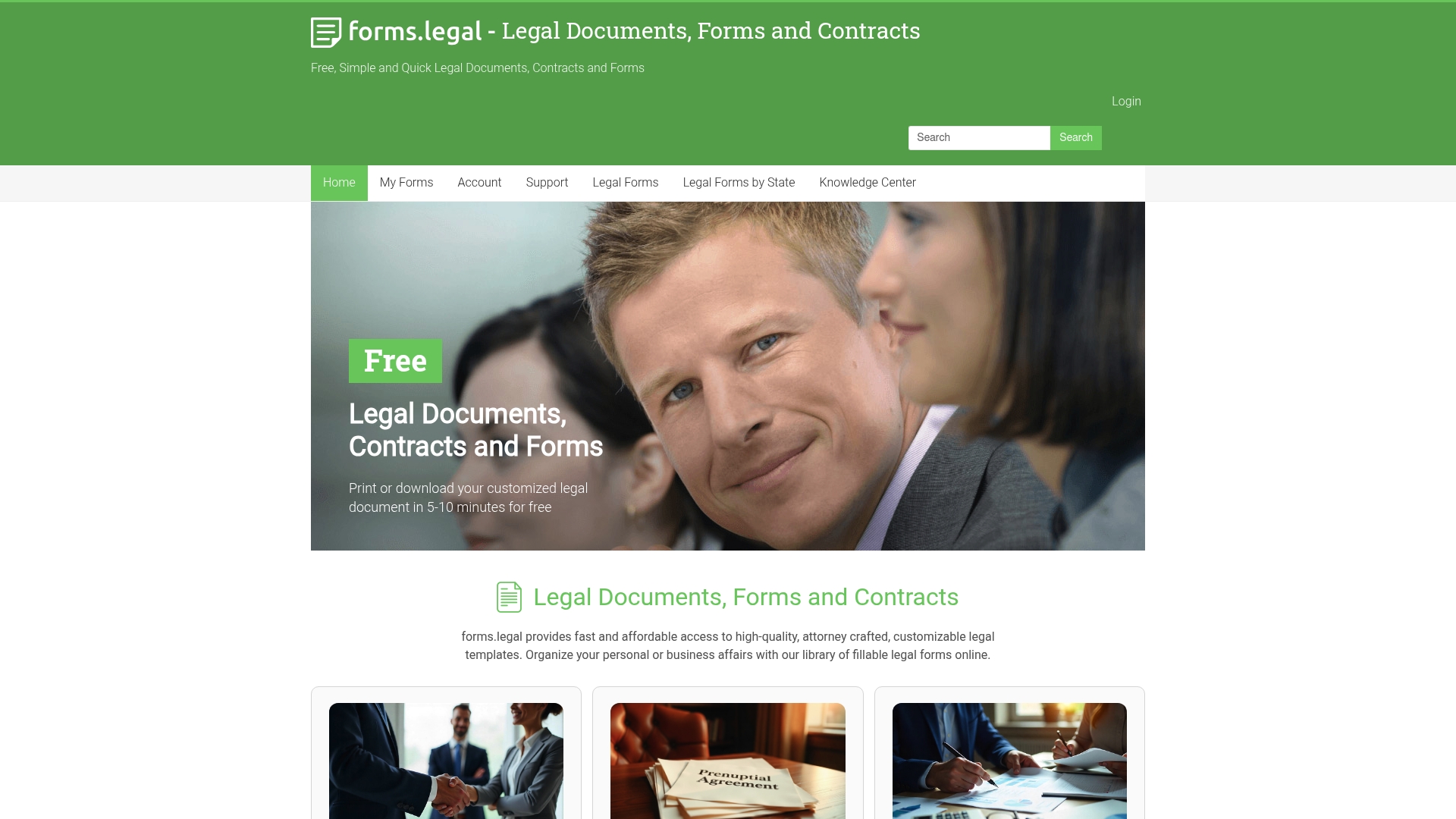
Take control of your legal paperwork with forms.legal, a trusted platform offering high-quality, ready-to-use templates for everything from partnership agreements to leases and wills. Customize and download documents in minutes and ensure your business stays compliant across different jurisdictions. Act now to streamline your legal process and reduce risks by visiting forms.legal and turning free legal forms into powerful tools tailored just for you.
Frequently Asked Questions
What are free legal forms used for?
Free legal forms are standardized template documents designed to help individuals and small businesses create legally relevant paperwork quickly and cost-effectively. They cover a range of legal needs, including contracts, agreements, and court-related documents.
Are free legal forms legally binding?
While free legal forms provide a foundational template, they are not universally binding. Their enforceability depends on proper customization to meet specific legal requirements and compliance with applicable laws in the user’s jurisdiction.
How do I customize and download a free legal form?
To customize a free legal form, select a relevant template, fill in required personal or business details, and modify any necessary wording. Most platforms offer downloadable formats like editable PDFs and Word documents for easy customization.
What are the risks of using free legal forms?
The primary risks include the potential for ambiguous language and incomplete clauses that may not adequately address specific business needs or jurisdictional requirements. It’s advisable to have a legal professional review these documents to identify any vulnerabilities.