 -
-Filling out legal documents often feels overwhelming, especially when every small mistake could set your business back. For American entrepreneurs, getting the paperwork right means gathering critical records and entering information with accuracy. With attorney-drafted templates and the right guidance, you can tackle each step more confidently and keep your business documentation up to speed without needing immediate legal consultation. Proper document preparation lays the groundwork for staying compliant and avoiding costly setbacks.
Table of Contents
- Step 1: Gather Necessary Information And Documents
- Step 2: Select The Appropriate Legal Form
- Step 3: Enter Personal And Business Details Accurately
- Step 4: Review And Verify All Entered Information
- Step 5: Finalize, Sign, And Store The Completed Form
Quick Summary
| Key Point | Explanation |
|---|---|
| 1. Gather Essential Documents | Collect personal IDs, tax returns, and business licenses to ensure accurate form preparation. |
| 2. Choose the Right Business Structure | Assess options like Sole Proprietorship or LLC to align with goals and minimize taxes. |
| 3. Enter Accurate Information | Input personal and business details precisely to avoid delays or document rejection. |
| 4. Review for Errors | Thoroughly verify every detail to ensure completeness and prevent bureaucratic delays. |
| 5. Finalize and Store Documents Safely | Sign properly and create secure backups, both physical and digital, for legal validation. |
Step 1: Gather Necessary Information and Documents
Successfully completing legal forms starts with collecting the right documentation. Your goal in this step is to assemble every critical piece of information required for accurate business form preparation.
Begin by creating a comprehensive checklist of documents you’ll need. Start with personal identification items: your Social Security Number, business tax ID, and driver’s license. The IRS offers guidance on document preparation to help streamline this process. You’ll want to gather the following key documents:
- Previous year’s tax returns
- Business registration certificates
- Partnership agreements (if applicable)
- Financial statements
- Bank account information
- Payroll records
- Employment documentation
Organizing these documents systematically can save significant time and reduce potential errors. Pro tip: Create a dedicated digital folder or physical file where you can store all these critical papers, ensuring nothing gets misplaced.
Proper document preparation is the foundation of smooth legal form completion.
Companies often overlook the importance of having supporting documentation ready. When you have all materials organized and accessible, you’ll move through the form-filling process much faster. Small business tax forms require meticulous documentation, so thoroughness is key.
Pro Tip: Invest in a scanner or digital document management system to create backup copies of all your important business documents.
This table summarizes how digital document management benefits your business process:
| Benefit | Impact on Business | Long-Term Value |
|---|---|---|
| Security | Reduces loss risk | Protects vital records |
| Accessibility | Faster document access | Boosts workflow speed |
| Compliance | Simplifies audits | Helps legal adherence |
| Backup | Disaster recovery ready | Ensures business continuity |
Step 2: Select the Appropriate Legal Form
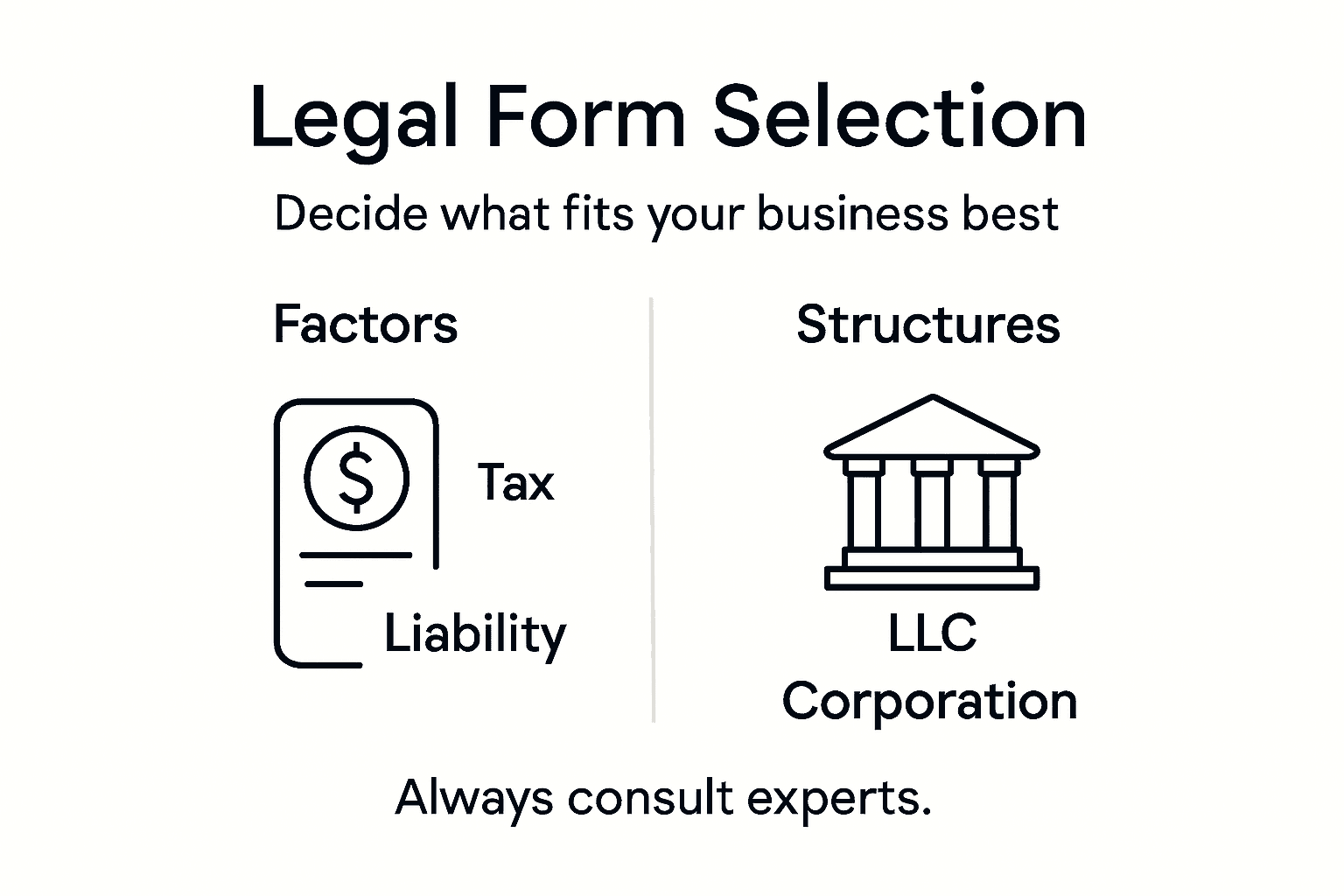
Choosing the right legal business structure is a critical decision that impacts everything from taxes to personal liability. Your goal is to select a business form that aligns perfectly with your company’s goals, operational needs, and long-term growth strategy.
Businesses have multiple legal structure options to consider, each with unique advantages and requirements. The most common structures include:
- Sole Proprietorship: Simplest form, ideal for single-owner businesses
- Partnership: Good for businesses with multiple owners
- Limited Liability Company (LLC): Provides personal asset protection
- Corporation: Complex structure with robust legal protections
- S Corporation: Tax-advantaged structure for small businesses
Selecting the right business structure can save you thousands in taxes and protect your personal assets.
When evaluating structures, consider key factors like tax implications, legal liability, and operational complexity. Different business structures impact tax filing significantly, so consult with a tax professional to understand the nuanced differences.
Here’s a comparison of popular business structure types and their main effects:
| Structure Type | Tax Complexity | Personal Liability | Growth Flexibility |
|---|---|---|---|
| Sole Proprietorship | Simple tax reporting | High risk | Limited scalability |
| Partnership | Pass-through taxes | Shared risk | Moderate adaptability |
| LLC | Flexible taxes | Limited exposure | Easy ownership changes |
| Corporation | Double taxation | Strong protection | Easiest to raise funds |
| S Corporation | Pass-through profits | Limited exposure | Limited shareholder base |
Pro Tip: Consult both a tax attorney and an accountant before finalizing your business structure to ensure you understand all legal and financial implications.
Step 3: Enter Personal and Business Details Accurately
Precision is paramount when filling out legal forms – a single mistake can derail your entire business registration process. Your objective is to input every piece of personal and business information with absolute accuracy and consistency across all documents.
When entering details, pay close attention to critical information requirements that government agencies demand. The most essential elements include:
- Full Legal Name: Exactly as it appears on official identification
- Business Name: Precise registered name with correct spelling
- Contact Information: Current address, phone number, email
- Tax Identification Numbers: Social Security or Employer Identification Number (EIN)
- Ownership Details: Complete information for all business owners
- Authorized Signatories: Names and titles of individuals authorized to sign documents
Small errors can lead to significant delays or complete document rejection.
Business document filing requires meticulous attention to prevent processing complications. Double-check every field, ensuring spelling matches official documents and contact information is current. Utilize digital tools like spell-check and have a second person review your entries for maximum accuracy.

Pro Tip: Create a digital folder with scanned copies of all source documents to cross-reference during form completion.
Step 4: Review and Verify All Entered Information
Careful verification is the final checkpoint between successful document submission and potential costly rejections. Your mission is to meticulously examine every detail you’ve entered, ensuring absolute accuracy and completeness before final submission.
Business document verification requires systematic checking to prevent processing complications. Use this comprehensive review checklist:
- Cross-Reference Documents: Compare form entries against original source documents
- Verify Personal Information: Confirm names, addresses, contact details
- Check Tax Identification Numbers: Validate Social Security or EIN numbers
- Validate Signatures: Ensure all required signatures are present and match official records
- Confirm Fee Calculations: Verify all financial information and required payments
- Validate Business Structure Details: Double-check ownership and organizational information
One missed detail can trigger weeks of bureaucratic delays and additional paperwork.
The IRS recommends thorough document review to guarantee legal compliance. Utilize digital tools like spell-check and consider having a second person perform an independent review. Attention to detail matters more than speed.
Pro Tip: Create a digital checklist with screenshot evidence of each verification step to maintain a clear audit trail of your document preparation process.
Step 5: Finalize, Sign, and Store the Completed Form
You’ve carefully prepared your legal form – now it’s time to transform your hard work into an official document through proper finalization, signing, and secure storage. Your goal is to validate the document and create a robust record-keeping system that protects your business interests.
Legal document signature requirements are critical for ensuring your form’s legal validity. Follow these essential finalization steps:
- Verify Signature Authorization: Confirm only authorized representatives sign the document
- Use Consistent Ink Color: Blue or black ink for official signatures
- Sign in Designated Areas: Only sign within specified signature lines
- Include Date with Signature: Always date your signature
- Make Copies for Your Records: Create physical and digital backups
- Scan Signed Original: Create a high-quality digital copy
A single misplaced signature can invalidate an entire legal document.
IRS guidelines emphasize proper form completion and recommend maintaining comprehensive records. Implement a systematic document storage strategy that ensures both physical and digital copies are preserved securely and accessibly.
Pro Tip: Create a dedicated digital folder with timestamp-labeled scans of signed documents, and store physical originals in a fireproof, locked filing cabinet.
Simplify Your Business Legal Forms with Expert Templates
Filling out legal forms for business success can feel overwhelming when accuracy and compliance are critical at every step. The challenges of gathering paperwork, selecting the right legal structure, and entering precise details demand a clear, dependable solution. At forms.legal, we understand how crucial it is to have access to easy-to-use, attorney-crafted templates that take the guesswork out of business form preparation.
Empower yourself to move confidently through every phase described in the article from document organization to final signature. Our platform offers customizable business agreements and contracts designed to match your unique requirements. Whether you need partnership agreements or employment contracts, start with reliable legal forms that ensure precision and compliance. Don’t risk delays or costly mistakes — visit forms.legal now and experience how simple professional legal form creation can accelerate your business success.
Frequently Asked Questions
What documents do I need to gather before filling legal forms for my business?
You need to collect essential documents such as your Social Security Number, business tax ID, previous year’s tax returns, and business registration certificates. Create a checklist to ensure you don’t miss any critical paperwork, which can save time and prevent errors.
How do I choose the right legal business structure when filling out forms?
Select a business structure that aligns with your needs, such as a Sole Proprietorship, Partnership, LLC, or Corporation. Consider factors like taxes, personal liability, and long-term growth to make an informed decision that benefits your business.
Why is accuracy important when entering personal and business details on legal forms?
Accuracy is crucial because even minor mistakes can lead to delays or rejections of your documents. To avoid issues, double-check all entries against official sources to ensure everything is correct before submission.
What steps should I take to review and verify my entered information?
Systematically examine each field for accuracy by cross-referencing entries with original documents. This thorough review helps catch errors and ensure compliance, so make this a standard part of your form-filling process.
What should I do after filling out my legal forms before final submission?
Finalize your forms by ensuring all necessary signatures are present and that you’ve made both physical and digital copies for your records. Creating a comprehensive storage strategy will protect your documents and ensure easy access in the future.
How can I ensure my completed legal forms are stored securely?
Store your completed legal forms in a fireproof, locked filing cabinet and create high-quality digital scans for backup. Implement a labeling system for easy retrieval and organization to keep your records safe and accessible.
Recommended
- Legal Forms Organization Process for Small Businesses
- 7 Essential Legal Forms Tips for Small Business Success
- Why Use Online Legal Documents for Business Success
- Why Use Free Legal Forms: Quick Solutions for Small Businesses
- How to Build Investor Partnerships for Real Estate Success | Bold Street AI