 -
-Scrambling to pick the right legal form for your business can feel overwhelming when options range from a sole proprietorship to a corporation. Making this decision matters because it shapes your liability, tax obligations, and how much control you keep as your business grows. This guide explains the core definition of legal form, clears up common myths, and helps you avoid costly missteps, so you can focus on running your American business with confidence.
Table of Contents
- Legal Form: Core Definition And Misconceptions
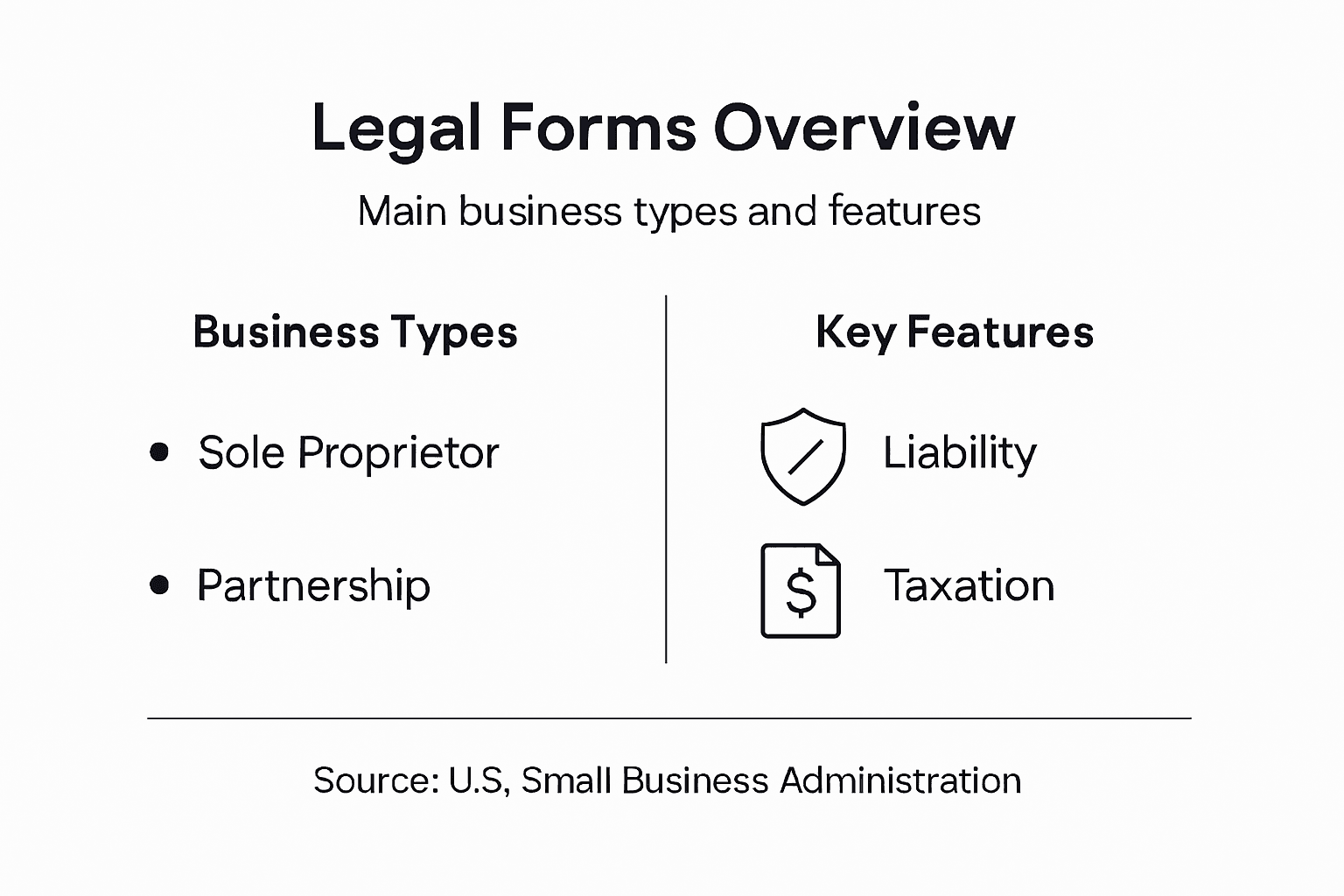
- Types Of Legal Forms Used In Business
- Key Features And Structure Of Legal Forms
- Legal Requirements And Compliance In The U.S.
- Risks, Costs, And Common Pitfalls
Key Takeaways
| Point | Details |
|---|---|
| Understanding Legal Forms is Essential | Choosing the right legal structure impacts ownership, liability, taxation, and business growth strategies. |
| Misconceptions Can Be Costly | Changing legal forms is not always simple, and assumptions about one-size-fits-all structures may lead to long-term issues. |
| Ongoing Compliance is Critical | Businesses must consistently monitor and adapt to legal and regulatory requirements to avoid penalties and legal issues. |
| Risk Management is Key | Identifying and addressing legal risks proactively can help protect personal and business assets from significant financial harm. |
Legal Form: Core Definition and Misconceptions
A legal form is the official recognition of a business’s ownership structure as defined by legal and taxation authorities. Understanding this concept is crucial for small business owners navigating the complex landscape of organizational design and regulatory compliance.
In the United States, businesses typically have three primary legal ownership structures: sole proprietorship, partnership, and corporation. Each structure carries unique implications for management, financing, liability, and taxation. The choice of legal form isn’t just a bureaucratic checkbox – it fundamentally shapes how your business operates and grows.
Key Characteristics of Legal Forms Include:
- Ownership configuration
- Financial liability exposure
- Tax treatment and reporting requirements
- Management and control mechanisms
- Business continuity and succession planning
The legal form of an organization isn’t static. As businesses evolve, their legal structure often adapts to reflect changing operational needs, growth strategies, and risk management priorities. What works for a solo freelancer might not serve a rapidly expanding startup with multiple shareholders.
Potential Legal Form Misconceptions:
- Changing legal form is simple and costless
- One size fits all business structures
- Legal forms have no long-term strategic implications
- Personal and business liability are always separate
Pro tip: Consult a qualified business attorney or tax professional before finalizing your business’s legal form to ensure you’re making the most strategic choice for your specific circumstances.
Types of Legal Forms Used in Business
Small business owners have several legal business entity types available in the United States, each with unique advantages and strategic implications. The choice of legal form can significantly impact taxation, liability protection, management structure, and overall business flexibility.
Primary Legal Forms for Businesses Include:
- Sole Proprietorship: Simplest form, where one individual owns and operates the business
- Partnership: Business owned by two or more individuals sharing profits and responsibilities
- Limited Liability Company (LLC): Hybrid structure offering personal asset protection and tax flexibility
- Corporation: Formal business entity with shareholders, board of directors, and complex governance
- Limited Liability Partnership (LLP): Professional partnership with reduced personal liability
Each legal form comes with distinct characteristics that can either accelerate or hinder business growth. A sole proprietorship might work perfectly for a freelance graphic designer, while a tech startup would likely benefit from the investor-friendly structure of a corporation.

Here is a comparative overview of common business legal forms in the United States:
| Legal Form | Ownership Structure | Typical Liability Level | Taxation Approach |
|---|---|---|---|
| Sole Proprietorship | Single individual | Unlimited personal liability | Income taxed personally |
| Partnership | Two or more individuals | Shared personal liability | Pass-through, split by share |
| LLC | Members (one or more) | Limited personal liability | Flexible, often pass-through |
| Corporation | Shareholders | Strong liability protection | Separate entity taxed |
| Limited Liability Partnership (LLP) | Registered partners | Limited partner liability | Pass-through, partners taxed individually |
Factors to Consider When Choosing a Legal Form:
- Desired level of personal liability protection
- Complexity of tax reporting requirements
- Potential for future business expansion
- Number of owners and their investment levels
- Industry-specific regulatory considerations
Selecting the right legal form is not just a bureaucratic decision, but a strategic move that can define your business’s future trajectory.
Pro tip: Consult with a business attorney or tax professional to thoroughly evaluate which legal form aligns best with your specific business goals and operational needs.
Key Features and Structure of Legal Forms
Legal forms represent the fundamental architectural blueprint for how businesses organize their operations, with each structure offering unique legal and financial characteristics. Understanding these structural nuances is critical for entrepreneurs seeking to establish a robust and legally compliant business framework.
Core Structural Components of Legal Forms Include:
- Ownership Configuration: Defines individual or collective business ownership
- Liability Protection: Determines personal asset risk exposure
- Taxation Mechanisms: Establishes how business income is reported and taxed
- Management Governance: Outlines decision-making processes and organizational hierarchy
- Compliance Requirements: Specifies legal and regulatory obligations
Each legal form presents a different balance between flexibility, complexity, and protection. A sole proprietorship offers simplicity but minimal protection, while a corporation provides extensive liability shields but demands more complex administrative processes.
Key Differentiating Factors Across Legal Forms:
- Formation complexity and associated costs
- Personal asset protection levels
- Tax treatment and reporting requirements
- Ability to raise external capital
- Perpetuity and transferability of business interests
The right legal form acts as a strategic shield, protecting your business while enabling growth and minimizing potential legal vulnerabilities.
Pro tip: Conduct a comprehensive assessment of your business goals, risk tolerance, and growth potential before finalizing your legal form to ensure long-term strategic alignment.
Legal Requirements and Compliance in the U.S.
Navigating the complex landscape of business compliance requirements demands meticulous attention to federal, state, and local regulations. Small business owners must understand that legal compliance is not a one-time task, but an ongoing process that requires consistent monitoring and proactive management.
Key Compliance Areas for U.S. Businesses:
- Tax reporting and payment obligations
- Employment law adherence
- Industry-specific licensing requirements
- Corporate documentation and record-keeping
- Permit renewals and regulatory filings
- Environmental and safety standards
The compliance landscape varies dramatically depending on your business structure, industry, and geographic location. A corporation faces more stringent reporting requirements compared to a limited liability company (LLC), which enjoys more administrative flexibility.
Potential Compliance Consequences Include:
- Substantial financial penalties
- Legal action and potential business dissolution
- Loss of good standing with state authorities
- Restricted access to business banking and credit
- Potential personal liability for business owners
Compliance is not about perfection, but about demonstrating a good-faith effort to understand and meet legal obligations.
Pro tip: Develop a comprehensive compliance calendar that tracks all critical deadlines, renewals, and reporting requirements specific to your business structure and industry.
Risks, Costs, and Common Pitfalls
Understanding the legal risks for U.S. business owners is critical for protecting your business and personal assets. Navigating the complex legal landscape requires strategic planning and proactive risk management to avoid potentially devastating financial and operational consequences.
Major Legal Risks for Small Businesses Include:
- Improper business structure selection
- Personal liability exposure
- Contract drafting and interpretation errors
- Employment law compliance challenges
- Intellectual property vulnerabilities
- Regulatory and reporting violations
Small business owners frequently underestimate the potential financial impact of legal missteps. A single contract dispute or employment law violation can result in thousands of dollars in legal fees, penalties, and potential business disruption.
The table below summarizes potential consequences of non-compliance and legal missteps in small business operations:
| Legal Issue | Likely Financial Impact | Long-Term Business Consequence |
|---|---|---|
| Regulatory Violation | Heavy fines, penalties | Risk of shutdown or lawsuit |
| Employment Law Lapse | Litigation costs, settlements | Damaged reputation, hiring trouble |
| Poor Structure Selection | Higher taxes, lost assets | Inability to attract investors |
| Contract Mistake | Unforeseen liabilities | Loss of business relationships |
Potential Financial Consequences of Legal Risks:
- Unexpected litigation expenses
- Regulatory fines and penalties
- Loss of business licenses
- Personal asset seizure
- Reputational damage and lost business opportunities
- Potential criminal charges for serious violations
Legal risks are not just theoretical challenges – they represent real financial threats that can undermine years of hard work and investment.
Pro tip: Invest in comprehensive legal insurance and schedule annual consultations with a business attorney to proactively identify and mitigate potential legal vulnerabilities.
Secure Your Business Future by Choosing the Right Legal Forms Today
Choosing the correct legal form is one of the most important decisions an entrepreneur can make. From protecting your personal assets to ensuring tax efficiency and smooth management, your legal structure affects every aspect of your business journey. Yet, many small business owners face challenges in creating the necessary legal documents to support these structures without costly attorney fees or complicated processes.
Take control of your business’s legal foundation with forms.legal. Our platform offers easy-to-use, attorney-crafted legal forms customized for your needs such as partnership agreements, LLC operating agreements, and corporation documents. Avoid the pitfalls of improper structure or compliance lapses by having the right contracts ready to go within minutes. Don’t wait until legal risks turn costly. Visit forms.legal now to access top-quality legal business documents and confidently build your company’s future.
Frequently Asked Questions
What is a legal form in business?
A legal form refers to the official ownership structure of a business as recognized by legal and taxation authorities. It determines how a business is managed, taxed, and its liability exposure.
Why does a business need to choose a legal form?
Choosing a legal form is crucial because it affects liability protection, taxation, management structure, and the ability to raise capital, which all influence the business’s operational success and growth potential.
What are the main types of legal forms for businesses?
The main types of legal forms for businesses include sole proprietorship, partnership, limited liability company (LLC), corporation, and limited liability partnership (LLP). Each comes with distinct advantages and legal implications.
Can a business change its legal form later?
Yes, a business can change its legal form as it evolves. However, this process can entail costs and legal implications, so it’s advisable to consult a qualified attorney when considering such a change.