 -
-Nearly 60 percent of American entrepreneurs say that legal paperwork slows down their business growth. For busy owners and startups around the world, instant access to digital legal resources is changing how vital agreements are handled. With customizable online documents now just a click away, you can save time, cut costs, and manage risk—without sacrificing professional quality or getting weighed down by attorney fees.
Table of Contents
- What Are Online Legal Documents?
- Popular Types And Key Use Cases
- How Digital Legal Templates Work
- Legal Validity And Regulatory Compliance
- Risks, Costs, And Common Pitfalls
Key Takeaways
| Point | Details |
|---|---|
| Accessibility | Online legal documents are easily customizable and provide quick access for professionals and businesses. |
| Efficiency | Digital templates enable rapid document creation and reduce costs associated with traditional legal services. |
| Legal Validity | Compliance with legal standards and authentication is crucial for the enforceability of digital documents. |
| Risk Management | Organizations must address potential legal risks and ensure proper document oversight to protect their interests. |
What Are Online Legal Documents?
Online legal documents are digitally accessible legal instruments that provide businesses and individuals with electronically executed agreements, contracts, and forms. These digital legal resources represent formally drafted documents that carry the same legal weight as traditional paper-based documents, enabling professionals to create, customize, and share critical legal paperwork through web platforms. Legal research platforms have revolutionized how people interact with legal documentation by providing unprecedented access to official legal materials.
At their core, online legal documents encompass various types of legally binding instruments, including business contracts, employment agreements, non-disclosure forms, partnership documents, intellectual property releases, and regulatory compliance paperwork. Unlike traditional legal documentation that requires physical printing and manual signing, these digital alternatives allow instant creation, immediate editing, and seamless electronic signature integration. Small business owners and entrepreneurs can rapidly generate professional-grade documents without extensive legal consultation, significantly reducing time and expenses associated with traditional legal document preparation.
The primary advantage of online legal documents lies in their accessibility, customization potential, and efficiency. Entrepreneurs can quickly select pre-drafted templates matching their specific business needs, modify clauses to suit their unique requirements, and generate legally sound documents within minutes. Free legal document platforms have democratized legal documentation, making sophisticated legal instruments available to businesses of all sizes and budgets.
Pro tip: Always review online legal documents with a professional attorney to ensure complete compliance and protection of your specific business interests.
Popular Types and Key Use Cases
Online legal documents serve diverse needs across personal, business, and regulatory domains, with several critical document types emerging as essential tools for modern professionals. Legal document platforms facilitate quick creation of instruments that protect individual and organizational interests with remarkable efficiency and precision.
The most prevalent online legal documents include business contracts, which formalize agreements between companies, vendors, and partners. Employment agreements outline job responsibilities, compensation terms, and workplace expectations. Non-disclosure agreements (NDAs) protect sensitive business information, while partnership documents establish clear operational guidelines for collaborative ventures. Intellectual property release forms help entrepreneurs safeguard their innovations, and regulatory compliance documents ensure businesses meet essential legal standards.
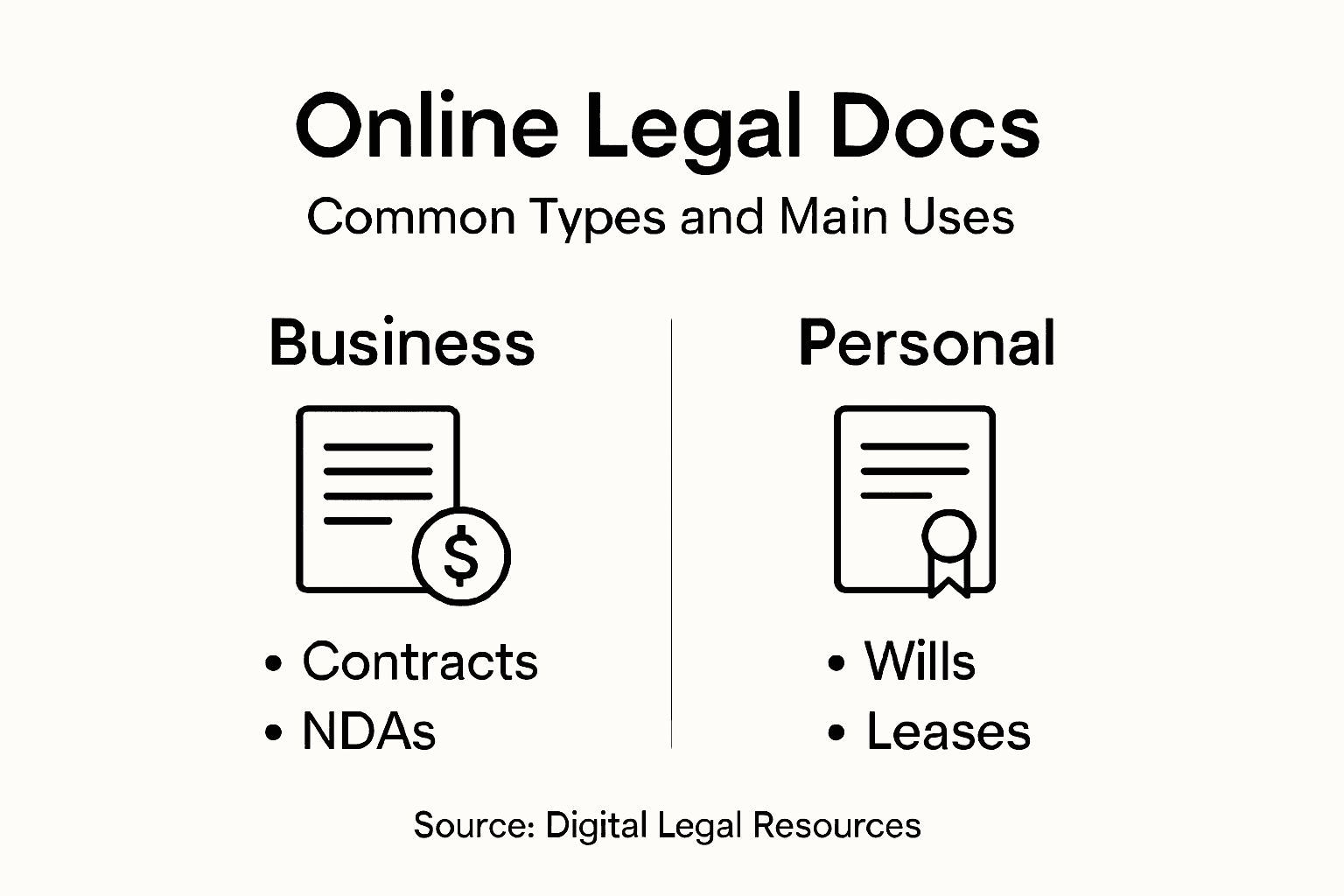
Beyond business applications, online legal resources support critical personal legal needs. Estate planning documents like wills and trusts enable precise asset distribution, while powers of attorney allow individuals to designate trusted representatives for financial or healthcare decisions. Real estate documents such as property deeds, lease agreements, and transfer documents streamline complex property transactions. These versatile digital tools democratize access to sophisticated legal instruments, allowing individuals and organizations to navigate legal complexities with greater confidence and control.
Here’s a summary of key online legal document types and their practical impacts:
| Document Type | Main Purpose | Typical User |
|---|---|---|
| Business Contract | Formalize deals and partnerships | Entrepreneurs, vendors |
| Non-Disclosure Agreement (NDA) | Protect sensitive information | Employees, contractors |
| Estate Planning Document | Direct asset distribution | Individuals |
| Intellectual Property Release | Safeguard innovations | Creators, startups |
| Regulatory Compliance Document | Ensure legal standards adherence | Businesses |
Pro tip: Maintain a digital folder with properly organized and updated legal documents to ensure quick access during critical moments.
How Digital Legal Templates Work
Digital legal templates represent a sophisticated technological approach to document creation, leveraging advanced software to simplify complex legal drafting processes. Legal technology platforms utilize intelligent design to transform traditional document preparation by enabling users to generate precise, customized legal instruments with remarkable efficiency.
The core mechanism of digital legal templates involves a structured, interactive process. Users begin by selecting a specific template matching their legal requirement, such as an employment contract, non-disclosure agreement, or partnership document. The template provides a comprehensive framework with pre-configured sections, standard legal language, and strategically placed input fields. As users enter their unique details – like names, dates, specific terms, and monetary values – the system dynamically adapts the document, ensuring that the fundamental legal structure remains intact while personalizing critical components.

Legal automation technologies incorporate advanced features like intelligent validation checks, which automatically detect potential inconsistencies or missing critical information. These smart systems can flag incomplete sections, suggest appropriate clauses, and even provide contextual guidance about specific legal requirements. By integrating artificial intelligence and comprehensive legal databases, digital templates minimize human error, reduce drafting time, and provide users with professionally structured documents that maintain legal integrity across various jurisdictions and use cases.
To help you compare, here are major business impacts of adopting digital legal templates vs. traditional paperwork:
| Aspect | Digital Templates | Traditional Paperwork |
|---|---|---|
| Preparation Speed | Minutes, automated | Hours or days, manual |
| Error Risk | Reduced by validation checks | Higher due to manual editing |
| Cost | Lower, fewer consultations needed | Higher, frequent legal fees |
| Accessibility | Available any time, remote | Physical access required |
Pro tip: Always review your completed digital legal template with a qualified attorney to ensure complete accuracy and compliance with current legal standards.
Legal Validity and Regulatory Compliance
Legal validity for online documents hinges on meeting complex regulatory standards that vary across different jurisdictions. Legal governance frameworks establish critical guidelines that determine whether digital documents can be considered legally binding and enforceable. These frameworks require precise documentation, clear authentication mechanisms, and compliance with specific electronic signature and data protection regulations.
The primary components of ensuring legal validity involve multiple layers of verification and authentication. Digital legal documents must demonstrate several key characteristics: verifiable identity of signatories, explicit consent, unaltered document integrity, and a clear audit trail of document creation and modification. Advanced digital platforms incorporate encryption technologies, timestamp mechanisms, and multi-factor authentication to provide robust evidence of document legitimacy. This approach ensures that online legal documents can withstand potential legal scrutiny and maintain the same evidential weight as traditional paper-based documents.
Legal risk management strategies play a crucial role in maintaining regulatory compliance for digital legal documents. Organizations must continuously monitor changes in electronic documentation laws, implement comprehensive data protection protocols, and develop adaptive compliance frameworks. This involves regular legal audits, updating document templates to reflect current regulatory requirements, and establishing clear protocols for electronic signature validation. By proactively addressing potential legal vulnerabilities, businesses can minimize risks associated with digital document management and ensure their legal instruments remain fully enforceable across different legal jurisdictions.
Pro tip: Consult with a legal professional specializing in digital documentation to create a comprehensive compliance strategy tailored to your specific business needs.
Risks, Costs, and Common Pitfalls
Digital legal document platforms introduce complex risks that entrepreneurs must carefully navigate to protect their business interests. Legal document risks encompass multiple dimensions, including technological vulnerabilities, potential misinterpretation of legal language, and inadequate customization that could compromise document effectiveness. Small businesses often underestimate the nuanced challenges of relying exclusively on automated legal templates without professional oversight.
The financial implications extend beyond initial platform subscription costs. Businesses must invest in comprehensive training, regular template updates, and robust cybersecurity measures to mitigate potential legal exposure. Potential hidden expenses include legal consultation fees for document review, potential compliance penalties, and the cost of rectifying errors introduced by generic, non-specialized templates. Cybersecurity remains a critical concern, with digital platforms potentially exposing sensitive business information to unauthorized access or data breaches.
Compliance risk management demands a proactive approach to document preparation and verification. Common pitfalls include overlooking jurisdiction-specific legal nuances, failing to conduct thorough due diligence on beneficial ownership, and relying too heavily on automated systems that cannot replace human legal expertise. Organizations must implement rigorous verification processes, maintain ongoing legal education, and develop adaptive strategies that account for rapidly evolving regulatory landscapes. This requires continuous monitoring of legal changes, periodic template audits, and a commitment to maintaining the highest standards of document integrity.
Pro tip: Always allocate budget for professional legal review of critical documents, treating template platforms as a starting point rather than a complete legal solution.
Simplify Your Business Legal Needs with Trusted Online Documents
Running a business requires fast and reliable legal documentation solutions that protect your interests and save you time. This article highlights how online legal documents can reduce costs, minimize errors, and increase efficiency by offering customizable templates for contracts, NDAs, and compliance forms. If you want to avoid the common pitfalls of manual paperwork and streamline your legal process confidently, forms.legal provides a powerful, attorney-crafted platform to get you started quickly.
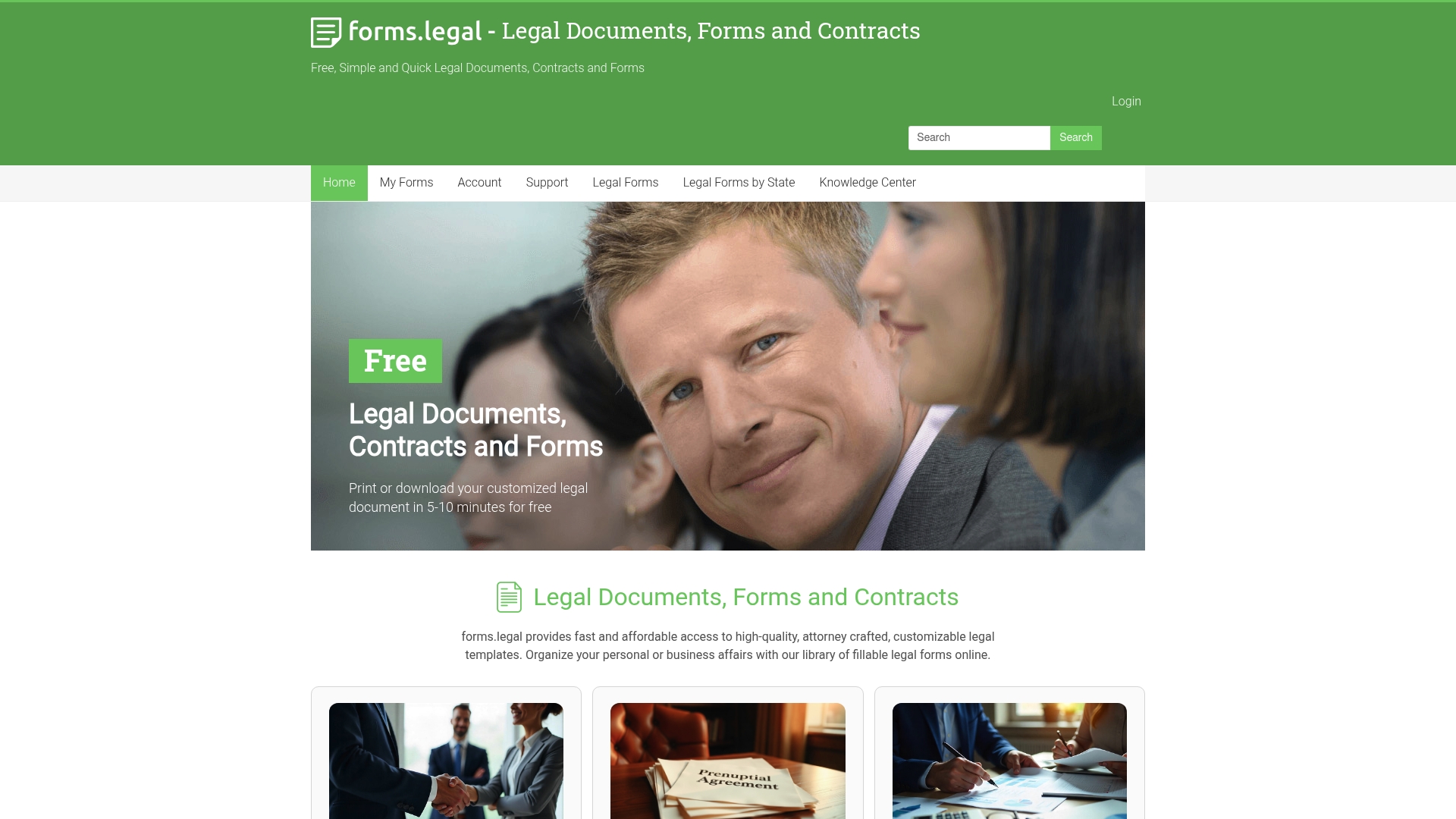
Experience the peace of mind that comes with easy access to professionally designed business agreements and other essential legal documents at your fingertips. Visit forms.legal now to explore our extensive library, customize your documents with step-by-step guidance, and download ready-to-use forms without lengthy legal consultations. Take control of your business success by embracing digital legal solutions today and ensure your documents are legally valid and compliance-ready.
Frequently Asked Questions
What are online legal documents?
Online legal documents are digitally accessible legal instruments, such as contracts and agreements, that can be created, customized, and shared electronically, carrying the same legal weight as traditional paper documents.
How do online legal documents benefit small business owners?
Online legal documents enable small business owners to quickly generate professional-grade legal paperwork without extensive legal consultation, significantly reducing time and costs associated with traditional document preparation.
What types of legal documents can I create online?
You can create various types of legal documents online, including business contracts, employment agreements, non-disclosure agreements, estate planning documents, and regulatory compliance paperwork.
Are online legal documents legally binding?
Yes, online legal documents can be legally binding as long as they meet regulatory standards, including proper authentication, consent, and document integrity, similar to traditional paper-based documents.