 -
-Managing rental properties in the United States can quickly become overwhelming when paperwork piles up and legal requirements shift from one state to another. U.S. landlords and property managers must handle a variety of binding contracts, from residential lease agreements to eviction notices, each governed by state laws and federal protections such as the Fair Housing Act. Reliable, customizable legal documents help protect property owners, support professional relationships with tenants, and reduce risks of costly conflicts or compliance mistakes.
Table of Contents
- Defining Real Estate Legal Documents Clearly
- Essential Document Types For U.S. Landlords
- Critical Clauses And Legal Requirements Explained
- Drafting, Customizing, And Managing Forms Efficiently
- Key Risks, Compliance Issues, And Common Mistakes
Key Takeaways
| Point | Details |
|---|---|
| Understanding Legal Documents | Real estate legal documents are essential for establishing rights and responsibilities in property transactions. Landlords should be familiar with different types of documents to protect their interests and maintain clear relationships with tenants. |
| Importance of Compliance | Landlords must adhere to local and state regulations in their legal documents to prevent disputes and ensure legal protection. Regular updates and legal reviews are crucial for compliance and risk management. |
| Utilizing Technology for Management | Digital tools can streamline the creation, storage, and compliance checking of legal documents. Implementing a robust document management system enhances efficiency and minimizes legal risks. |
| Avoiding Common Mistakes | Landlords should conduct thorough tenant screenings, maintain detailed documentation, and understand fair housing laws to prevent costly legal issues. A proactive approach to property management mitigates potential risks. |
Defining Real Estate Legal Documents Clearly
Real estate legal documents are the foundational paperwork that establishes rights, responsibilities, and protections for property transactions and rental agreements. These critical documents serve as legally binding contracts that outline the specific terms governing real property interactions. Unlike personal property that can be moved, real estate legal documents specifically address immovable assets like land, buildings, and permanent structures.
Legal documents in real estate typically cover several key categories, including residential leases, commercial property agreements, property transfer deeds, mortgage contracts, and lease addendums. Each document serves a unique purpose: residential lease agreements define tenant and landlord obligations, transfer deeds establish property ownership changes, and mortgage contracts outline financial terms for property purchases. Understanding the nuanced differences between these documents helps landlords protect their investments and maintain clear, legally sound relationships with tenants and other property stakeholders.
The complexity of real estate legal documents stems from their need to address multiple potential scenarios and protect all parties involved. These documents must account for state-specific regulations, potential disputes, property use restrictions, and financial obligations. Landlords should recognize that well-crafted legal documents are not just paperwork, but strategic tools that can prevent misunderstandings, provide clear recourse in conflicts, and establish professional boundaries in property management.
Here’s an overview of common real estate legal documents and their primary functions:
| Document Type | Main Purpose | Typical Users |
|---|---|---|
| Residential Lease | Defines tenant and landlord obligations | Landlords, Tenants |
| Transfer Deed | Establishes property ownership change | Sellers, Buyers |
| Mortgage Contract | Outlines property purchase financial terms | Buyers, Lenders |
| Lease Addendum | Updates or adds terms to existing lease | Landlords, Tenants |
| Commercial Agreement | Sets terms for business property rental | Landlords, Tenants |
Pro tip: Always have a legal professional review your real estate documents to ensure they comply with current local and state regulations and provide comprehensive protection for your property interests.
Essential Document Types for U.S. Landlords
U.S. landlords must maintain a comprehensive set of legal documents to protect their property investments and ensure smooth tenant relationships. Landlord-tenant law mandates specific documentation that covers various aspects of property management, from initial tenant screening to potential lease termination. These essential documents serve as critical legal safeguards that outline rights, responsibilities, and potential recourse for both property owners and tenants.
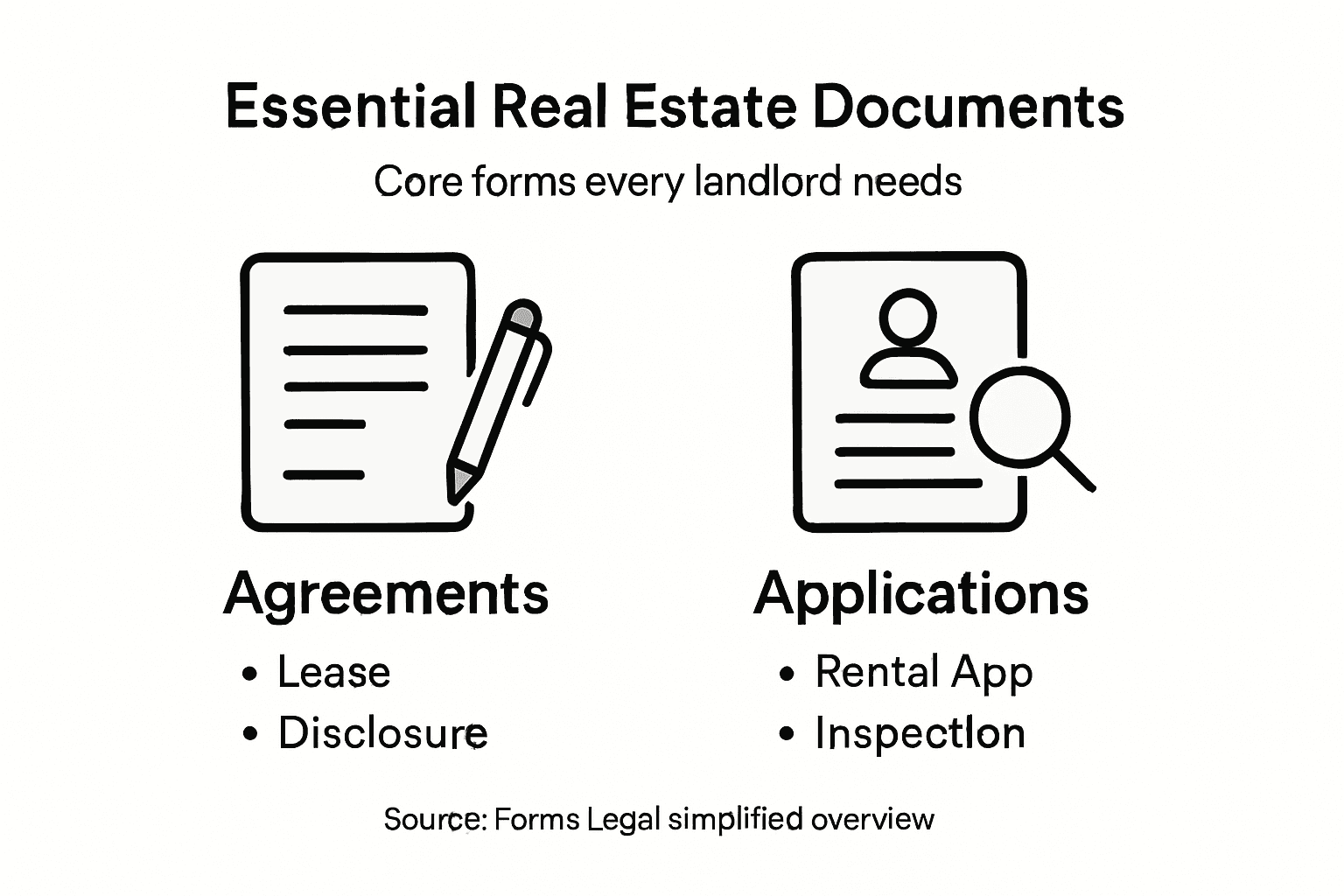
The core document types for U.S. landlords typically include residential lease agreements, rental applications, property condition reports, tenant screening forms, rent collection records, maintenance request forms, and eviction notices. Each document plays a unique role in property management: lease agreements define rental terms, screening forms help evaluate potential tenants, maintenance records document property upkeep, and eviction notices provide legal framework for addressing tenant violations. Comprehensive documentation helps landlords navigate potential disputes, demonstrate compliance with local and federal housing regulations, and maintain professional standards in property management.

Beyond standard lease documentation, landlords must also prepare state-specific disclosures, lead-based paint warnings, security deposit receipts, move-in and move-out checklists, and repair authorization forms. These additional documents protect landlords from potential legal challenges by providing clear, written evidence of property conditions, tenant agreements, and communication. Proper documentation is not just a legal requirement but a strategic approach to minimizing risks and establishing transparent, professional relationships with tenants.
Pro tip: Develop a standardized digital filing system for organizing and securely storing all rental property documents to ensure quick access and maintain comprehensive record-keeping.
Critical Clauses and Legal Requirements Explained
Landlords must carefully craft lease agreements that incorporate crucial legal clauses protecting both parties and establish clear expectations. These critical clauses define fundamental rights, responsibilities, and potential remedies in case of disputes, serving as a legal framework that governs the entire tenant-landlord relationship. Key provisions typically address rent payment terms, property maintenance obligations, entry rights, and potential lease termination conditions.
The most essential lease clauses include rent payment specifications, security deposit terms, maintenance responsibilities, property use restrictions, and eviction procedures. Rent clauses must clearly outline payment amounts, due dates, acceptable payment methods, and late fee structures. Maintenance clauses should detail landlord repair obligations and tenant responsibilities for property upkeep. Entry right clauses specify conditions under which landlords can access the property, typically requiring reasonable notice except in emergency situations. Termination clauses provide legal mechanisms for ending the lease under specific circumstances, protecting both tenant and landlord interests.
State-specific legal requirements significantly impact lease agreement language, making it crucial for landlords to understand local regulations. Different jurisdictions have varying rules about security deposit limits, mandatory disclosures, rent control provisions, and tenant screening practices. Landlords must ensure their lease documents comply with federal fair housing laws, state-specific tenant protection statutes, and local housing ordinances. This requires staying informed about current legal standards and potentially consulting local legal professionals to verify document compliance.
Pro tip: Review and update your standard lease agreement annually to ensure it remains compliant with current local and state legal requirements.
Drafting, Customizing, and Managing Forms Efficiently
Landlords can significantly streamline their legal document management by developing a systematic approach to drafting and formatting legal documents. Effective document creation involves establishing consistent templates, implementing digital organization strategies, and understanding the critical elements that make legal forms legally binding and comprehensive. The goal is to create adaptable documents that protect both landlord and tenant interests while remaining flexible enough to address unique property management scenarios.
A robust document management system should include standardized templates for core forms such as lease agreements, rental applications, maintenance requests, and notice of entry documents. These templates must be meticulously crafted to include state-specific legal language, clear payment terms, detailed property condition descriptions, and comprehensive liability clauses. Digital tools and cloud-based storage systems can help landlords maintain version control, track document modifications, and ensure quick access to critical paperwork. Customization is key – while using standard templates, each document should be tailored to specific property characteristics, tenant circumstances, and local regulatory requirements.
Technology plays a crucial role in efficient legal document management for modern landlords. Digital platforms allow for quick document generation, electronic signatures, secure storage, and easy retrieval. Landlords should invest in systems that enable document template customization, automated compliance checks, and integration with property management software. Regular review and updating of these documents is essential to ensure they remain current with changing local and state regulations, reflecting the most recent legal standards and protecting the landlord’s interests.
The table below compares core document management strategies for modern landlords:
| Strategy | Key Features | Business Impact |
|---|---|---|
| Standardized Templates | Unified format, legal compliance | Time savings, error reduction |
| Digital Storage Systems | Secure cloud access, easy search | Increased efficiency, security |
| Automated Compliance Checks | Alerts for law changes | Fewer legal risks, up-to-date docs |
| Customization Tools | Tailor forms to property details | Increased flexibility, accuracy |
Pro tip: Create a digital document management workflow that includes automatic reminders for annual template reviews and ensures all forms are stored in a secure, easily accessible cloud-based system.
Key Risks, Compliance Issues, and Common Mistakes
Landlords face significant challenges navigating the complex landscape of property management, with critical legal risks emerging from landlord-tenant interactions. Understanding these potential pitfalls is crucial for protecting property investments and maintaining legal compliance. The most substantial risks stem from improper screening, inadequate documentation, and misunderstanding of local housing regulations, which can lead to costly legal disputes and financial losses.
Common mistakes in property management include failing to conduct thorough tenant background checks, improperly handling security deposits, violating fair housing regulations, and neglecting property maintenance responsibilities. Landlords often underestimate the importance of detailed lease agreements that clearly outline expectations, repair protocols, and potential penalties. Potential risks range from tenant scams involving false rental applications to unintentional discrimination in tenant selection processes. Each jurisdiction has unique legal requirements, making it essential for landlords to stay informed about local and state-specific regulations that govern rental property management.
Technology and professional resources can help mitigate these risks by providing standardized screening processes, comprehensive document templates, and ongoing legal compliance updates. Successful landlords implement systematic approaches to tenant management, including rigorous application processes, detailed property condition reports, and clear communication protocols. Regular training, legal consultations, and staying updated on changing housing regulations are critical strategies for minimizing potential legal vulnerabilities and protecting property investments.
Pro tip: Develop a comprehensive compliance checklist that includes annual legal review, tenant screening protocols, and documented maintenance procedures to proactively prevent potential legal issues.
Simplify Your Real Estate Legal Documents Today
Managing real estate legal documents is a complex task that requires precision and compliance with state-specific laws. This article highlights the critical need for well-crafted leases, transfer deeds, and mortgage contracts that protect landlords from costly disputes and legal pitfalls. If you struggle with drafting detailed lease agreements or staying current with ever-changing regulations, you are not alone. Many landlords face the challenge of organizing these documents while ensuring they include essential clauses like rent payment terms and entry rights.
Take control of your property management with easy-to-use, customizable legal forms from forms.legal. Our attorney-crafted templates cover everything from residential leases to lease addendums so you can create comprehensive and compliant documents quickly. Avoid costly mistakes by using proven legal templates designed to keep your rental agreements clear and enforceable. Visit forms.legal now to start personalizing your real estate documents and gain peace of mind knowing your property interests are protected.
Frequently Asked Questions
What are the main types of real estate legal documents for landlords?
The main types of real estate legal documents for landlords include residential lease agreements, rental applications, property condition reports, tenant screening forms, rent collection records, maintenance request forms, and eviction notices. Each document serves a unique purpose in property management.
Why is it important for landlords to have detailed lease agreements?
Detailed lease agreements clearly outline the rights and responsibilities of both landlords and tenants, helping to prevent misunderstandings and disputes. They also include crucial legal clauses such as rent payment terms, security deposit conditions, and eviction procedures, which protect both parties.
How can landlords ensure their legal documents comply with current regulations?
Landlords can ensure compliance by regularly reviewing and updating their legal documents to reflect local and state regulations. Consulting with legal professionals and keeping informed about changes in landlord-tenant law is also essential to maintain compliance.
What risks do landlords face if their legal documentation is inadequate?
Landlords may face significant risks such as legal disputes, financial losses, and potential issues related to improper tenant screening and maintenance responsibilities if their documentation is inadequate. Comprehensive and compliant documents help mitigate these risks.
Recommended
- California Residential Rental Lease Agreement | Free CA Rental Lease Agreement
- Free Florida Rental Lease Agreement Template | FL Residential Lease Form
- How to Legally Rent Out a Room in Your House: A Complete Guide to Residential Lease
- Rental Lease Agreement Illinois | Free IL Rental Lease Agreement – Forms.Legal