 -
-Getting a rental agreement right can feel daunting for many landlords and property managers across the United States. With so many details to track and legal nuances to consider, the process often seems overwhelming. This guide delivers a clear path to creating a customized rental agreement using proven resources like American Apartment Owners Association forms and American Bar Association advice, giving you confidence to protect your property and tenant relationships without relying on costly attorney services.
Table of Contents
- Step 1: Gather Essential Property And Tenant Details
- Step 2: Select And Personalize Agreement Clauses
- Step 3: Review Legal Compliance For Your State
- Step 4: Finalize And Proofread The Rental Agreement
- Step 5: Execute Signatures And Save Documents Securely
Quick Summary
| Key Point | Explanation |
|---|---|
| 1. Gather detailed tenant information | Collect comprehensive details about tenants and properties to prevent misunderstandings and safeguard rights. |
| 2. Customize lease clauses carefully | Tailor agreement clauses to suit specific properties and legal requirements, ensuring clear communication and protection. |
| 3. Ensure legal compliance by state | Research state-specific rental laws to protect the legal validity of your agreement and adhere to regulations. |
| 4. Proofread rigorously for accuracy | Meticulously review the agreement for errors and clarity to maintain its enforceability and prevent legal issues. |
| 5. Secure signatures and documents | Execute signatures correctly and store documents securely to validate the rental agreement and protect against disputes. |
Step 1: Gather essential property and tenant details
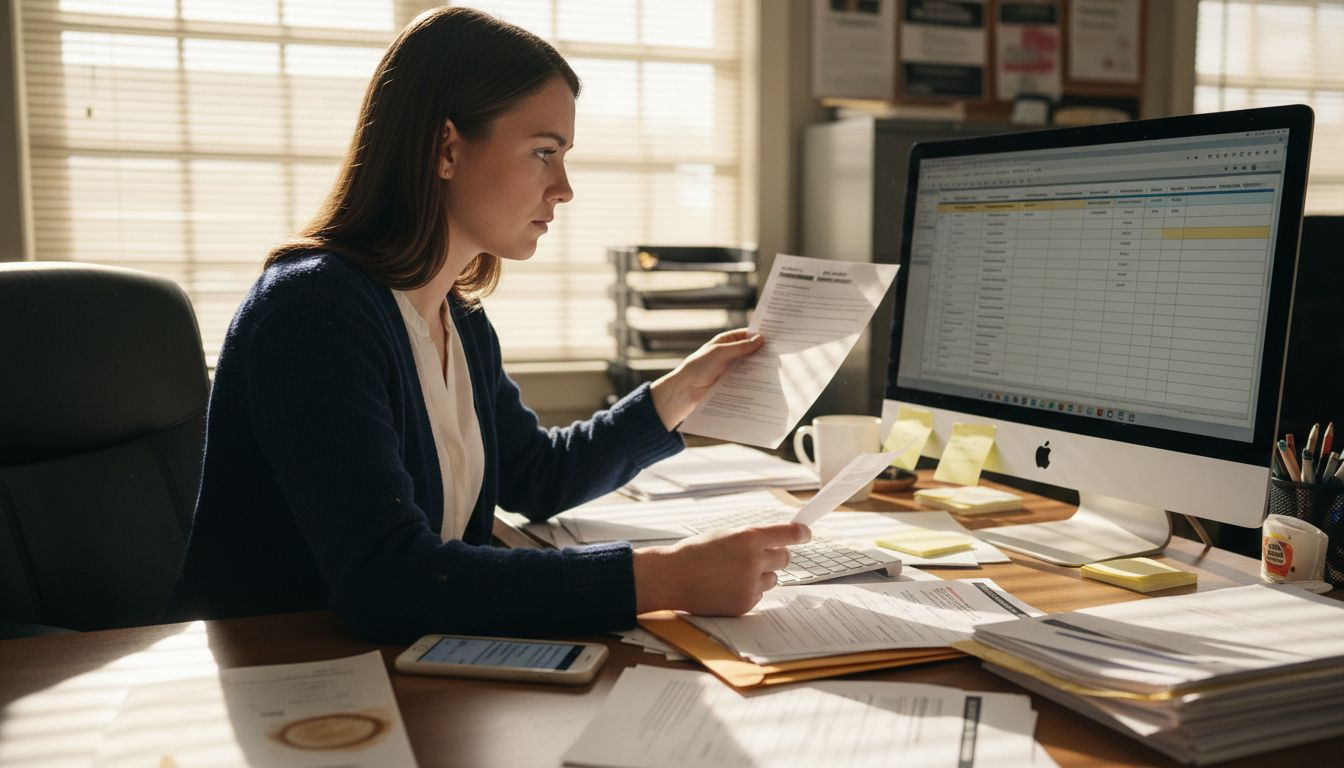
The first critical phase of creating a rock-solid rental agreement involves meticulously collecting comprehensive information about your property and potential tenants. By gathering detailed data upfront, you’ll establish a clear foundation that protects both your investment and your tenant’s rights.
Start by compiling a comprehensive tenant information packet that includes the following key elements:
- Full legal name of each adult who will occupy the property
- Social security number or government identification details
- Current employment information and monthly income verification
- Previous rental history with contact information for prior landlords
- Emergency contact details
- Vehicle information (if parking is part of the rental agreement)
For the property details, you’ll want to document:
- Complete property address
- Specific unit number (if applicable)
- Square footage
- Number of bedrooms and bathrooms
- Included amenities and fixtures
Thorough documentation prevents future misunderstandings and provides legal protection for both parties.
When collecting this information, use standard rental application forms that comply with state and federal regulations. These documents help systematically capture all necessary information while ensuring you remain legally compliant.
Pro tip: Always verify the information provided through background checks, income verification, and reference contacts to minimize potential rental risks.
Step 2: Select and personalize agreement clauses
Customizing your rental agreement requires strategic selection of clauses that protect your property interests while maintaining fair tenant relationships. The goal is to create a legally robust document that addresses potential scenarios and establishes clear expectations for both parties.
When developing your agreement, focus on including critical lease clauses that comprehensively cover essential areas:
- Rent payment terms including exact due dates and acceptable payment methods
- Late fee structures with clear penalties for missed payments
- Maintenance responsibilities for both landlord and tenant
- Property use restrictions defining acceptable occupancy and activities
- Security deposit conditions specifying deduction criteria
- Termination conditions outlining lease breach scenarios
Precise clause customization prevents misunderstandings and provides legal protection for your rental investment.
Each clause should be tailored to your specific property type, local regulations, and potential risk factors. Consider state-specific legal requirements and potential scenarios unique to your rental property.
- Review standard lease templates
- Modify clauses to match your specific property
- Ensure language is clear and unambiguous
- Have legal counsel review final document
Pro tip: Always use plain, straightforward language in your lease clauses to ensure tenants can easily understand their obligations and rights.
Step 3: Review legal compliance for your state
Navigating the complex landscape of state-specific rental regulations requires careful attention to detail and thorough research. Each state maintains unique legal requirements that can significantly impact your rental agreement’s validity and enforceability.
To ensure comprehensive landlord-tenant legal compliance, focus on these critical areas of state-specific regulations:
- Security deposit limitations including maximum allowable amounts
- Rent control restrictions in applicable jurisdictions
- Notice periods for lease termination and eviction
- Fair housing law requirements
- Maintenance and habitability standards
- Tenant privacy rights regarding property access
State laws can vary dramatically, making local legal research absolutely essential for protecting your rental investment.
Key steps to verify your compliance include:
- Contact your state’s housing authority
- Consult local real estate law resources
- Review current landlord-tenant regulations
- Consider consulting a local real estate attorney
Each state has nuanced regulations that can dramatically impact your rental agreement. What works in one state might be illegal in another, so thorough research is crucial.
Pro tip: Invest in an annual legal review of your rental agreement to ensure ongoing compliance with changing state regulations.
Step 4: Finalize and proofread the rental agreement
The final stage of creating your rental agreement demands meticulous attention to detail and a systematic approach to ensuring legal accuracy and clarity. Your goal is to craft a document that protects both your interests and provides transparent guidelines for your tenant.
When proofreading your rental document, focus on these critical areas of review:
- Spelling and grammatical accuracy
- Consistent formatting throughout the document
- Clarity of legal terms and language
- Alignment with state-specific regulations
- Completeness of all required sections
- Logical flow of information
A single overlooked error can potentially compromise the entire legal validity of your rental agreement.
Detailed proofreading steps include:
- Read the entire document slowly and carefully
- Check for numerical accuracy in financial terms
- Verify all personal and property information
- Confirm all dates and timelines are correct
- Cross-reference with state legal requirements
- Consider a professional legal review
Pay special attention to potential areas of ambiguity that could lead to future misunderstandings between you and your tenant.
Pro tip: Create a separate checklist for your final review and consider having a second set of eyes examine the document to catch any overlooked details.
Step 5: Execute signatures and save documents securely
Finalizing your rental agreement requires careful attention to signature execution and document preservation. Understanding the legal nuances of signatures will help protect both parties and ensure the enforceability of your rental contract.
When executing signatures, be aware of signature authentication requirements that validate your document:
- Handwritten signatures in traditional ink
- Electronic signatures compliant with E-SIGN Act
- Digital signature platforms with verification
- Witness requirements for specific states
- Date and location of signature
- Initialing key document pages
A legally valid signature demonstrates mutual agreement and intent to be bound by the rental contract.
Signature execution steps include:
- Confirm all parties are present or have access to document
- Review entire agreement together
- Sign in designated spaces
- Date each signature
- Provide copies to all parties
- Retain original in secure location
Ensure you maintain multiple secure backup copies of the signed document to protect your legal interests.
Here’s a summary of essential differences between traditional and digital rental agreement signatures:
| Aspect | Traditional Signature | Digital Signature |
|---|---|---|
| Legality | Accepted in all states | E-SIGN Act compliant |
| Convenience | Requires in-person signing | Remote and quick process |
| Security | Paper copies must be protected | Encryption and multi-factor security |
| Verification | Wet ink, often with witnesses | Timestamped with audit trail |
Pro tip: Use encrypted digital storage with multi-factor authentication to protect your signed rental agreements from unauthorized access.
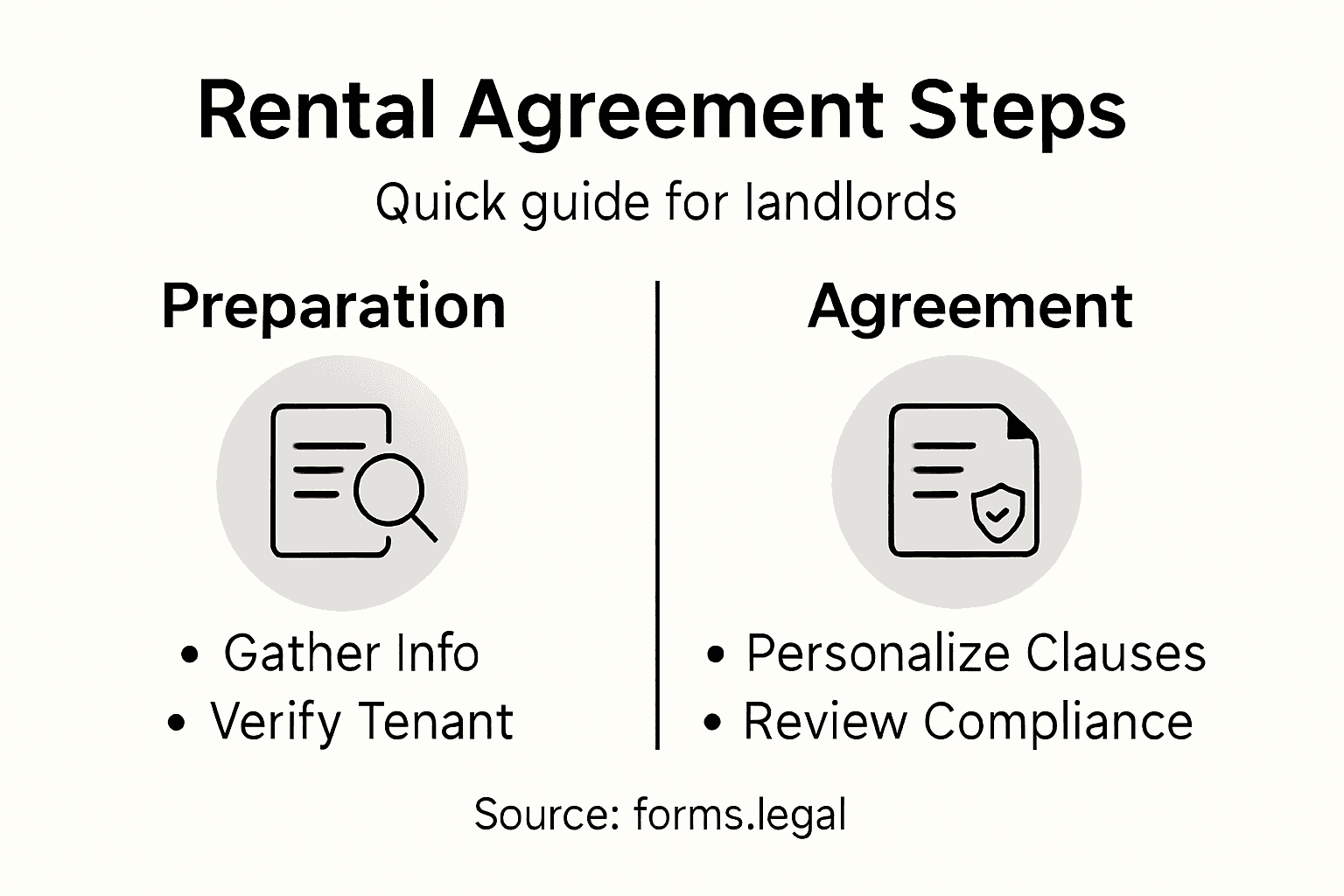
Compare key focus areas at each step of rental agreement creation:
| Step | Main Priority | Why It Matters |
|---|---|---|
| Gather Info | Accurate tenant/property details | Reduces future disputes |
| Customize Clauses | Tailored lease language | Clarifies obligations |
| Legal Review | State regulation compliance | Prevents unenforceable terms |
| Proofread | Clarity and completeness | Ensures legal validity |
| Execute/Store | Secure signatures and backup | Guarantees enforceability |
Simplify Your Rental Agreement Creation Today
Crafting a solid rental agreement can feel overwhelming with all the details you need to consider—from gathering tenant information to ensuring legal compliance across state laws. The guide highlights how crucial it is to personalize your lease clauses, review for accuracy, and execute valid signatures to protect your property and avoid costly disputes. If you want to escape the stress of manual drafting and reduce the risk of mistakes, you need reliable, customizable legal forms at your fingertips.
Take control of your landlord responsibilities now by using forms.legal, a trusted platform offering high-quality, attorney-crafted rental agreement templates that you can quickly personalize to suit your specific needs. Whether you need clear rental contract clauses or want to ensure your documents comply with state regulations, forms.legal helps you create, proofread, and execute rental agreements with confidence. Start streamlining your rental process today and protect your investment with the right legal tools. Visit forms.legal and get your customizable rental forms instantly.
Frequently Asked Questions
What information do I need to gather from tenants for the rental agreement?
To create a solid rental agreement, collect essential details such as the full legal name of each adult occupant, social security numbers, employment information, and rental history. Use a standard rental application form to streamline this process and ensure you capture all necessary data.
How can I customize the clauses in my rental agreement?
You can customize clauses by focusing on areas like rent payment terms, late fees, maintenance responsibilities, and termination conditions. Review standard lease templates and modify them to match your specific property and local regulations while ensuring clarity in language.
What are the key legal compliance aspects I need to review for my state?
Important legal compliance aspects include security deposit limitations, notice periods for lease termination, and fair housing law requirements. Contact your state’s housing authority or review local landlord-tenant regulations to ensure your agreement meets all necessary legal criteria.
How do I ensure my rental agreement is legally valid?
To ensure legal validity, proofread your rental agreement for accuracy, clarity, and compliance with state regulations. After completing this check, gather all parties to sign the document in the designated spaces and retain an original copy securely.
What steps should I take for the execution of signatures on my rental agreement?
For executing signatures, confirm that all parties are present or have access to the document, review the agreement together, and sign in the specified areas. After signing, date each signature and provide copies to all parties involved for their records.
How often should I review my rental agreement for compliance?
You should review your rental agreement annually to ensure it remains compliant with changing state regulations. Schedule this review around the time of lease renewals to keep your document current and legally sound.
Recommended
- Simple Lease Agreement Form for Easy Renting
- California Residential Rental Lease Agreement | Free CA Rental Lease Agreement
- Free Minnesota Rental Lease Agreement | MN Lease Template – Forms.Legal
- Free Rental Agreement Montana | Rental Lease Agreement MO – Forms.Legal
- Why Hire Movers for Apartments: Complete Guide
- What is estate management – Superstar nannies