 -
-Signing a lease can feel overwhelming for renters and landlords in American cities. Misunderstood rental agreement terms and widespread myths often lead to costly mistakes or legal disputes. Whether you are moving into your first apartment or renting out a property, knowing the difference between a fixed-term lease, a month-to-month agreement, and other contract nuances empowers you to protect your interests. Get clear, actionable guidance on key rental agreement concepts so you can sidestep common pitfalls and build a confident rental relationship.
Table of Contents
- Defining Rental Agreement Terms and Myths
- Types of Rental Agreements in U.S. Cities
- Essential Clauses and Their Functions
- Legal Rights and Duties of Parties
- Pitfalls, Risks, and How to Avoid Them
Key Takeaways
| Point | Details |
|---|---|
| Understanding Rental Agreement Terms | Familiarize yourself with key components such as lease duration, rent amount, and maintenance responsibilities to clarify expectations and avoid disputes. |
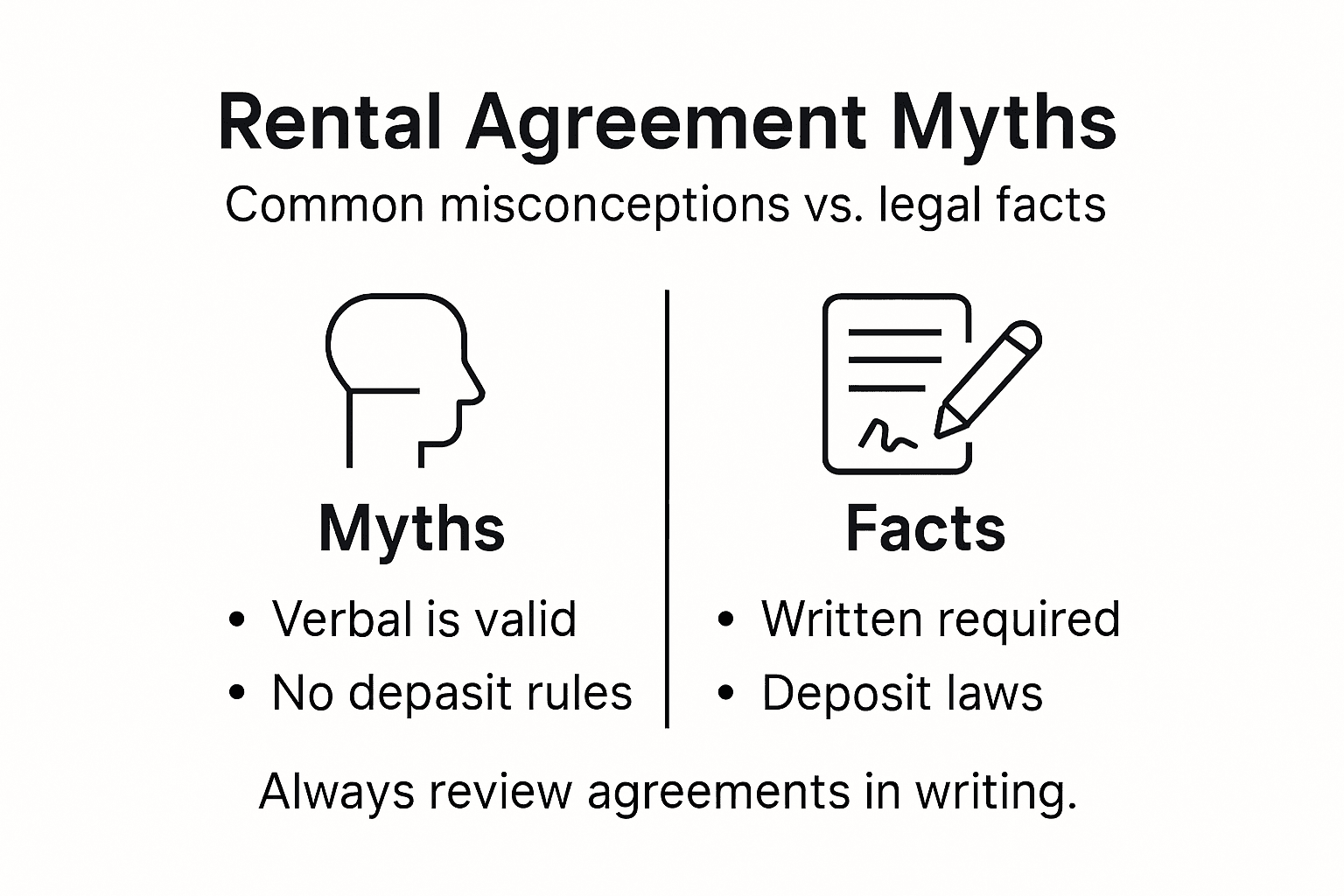
| Recognizing Common Rental Myths | Avoid misconceptions like the validity of verbal agreements and security deposit coverage by knowing your rights and responsibilities. |
| Identifying Rental Agreement Types | Be aware of various rental agreement structures, including fixed-term and month-to-month leases, to choose the best fit for your housing needs. |
| Navigating Legal Rights and Duties | Know the legal obligations for both landlords and tenants to ensure a fair housing experience and protect your interests. |
Defining Rental Agreement Terms and Myths
Rental agreements are legally binding contracts that establish the foundational relationship between landlords and tenants, yet many renters misunderstand their core components. Fundamental rental agreement terms encompass several critical elements that protect both parties’ interests and define their mutual responsibilities.
Most rental agreements contain several standard components that clarify expectations and legal obligations:
- Lease Duration: Specifies the exact time period of occupancy (fixed-term or month-to-month)
- Rent Amount: Clearly defines monthly payment, due date, and acceptable payment methods
- Security Deposit: Outlines conditions for deposit return and potential deductions
- Maintenance Responsibilities: Describes which repairs are tenant versus landlord obligations
- Occupancy Limits: Specifies how many people can legally reside in the rental unit
Understanding these terms helps renters avoid common misconceptions about their rights and responsibilities. Rental myths often emerge from misunderstandings about lease agreements, potentially leading to legal disputes or financial complications.
Some prevalent rental agreement myths include believing that verbal agreements are legally equivalent to written contracts, assuming landlords can change terms mid-lease without notice, or thinking security deposits automatically cover all potential damages. Tenants’ rights are actually much more nuanced and legally protected than many realize.
Pro tip: Always request and carefully read a complete copy of your rental agreement before signing, and consider having a legal professional review complex or unclear terms.
Types of Rental Agreements in U.S. Cities
The landscape of rental agreements in American cities is diverse and complex, with multiple contract types designed to address different housing needs and legal requirements. Residential rental agreements vary significantly across urban environments, reflecting local housing regulations and tenant protection laws.
Typical rental agreement structures include:
- Fixed-Term Lease: A contract with a specific start and end date, usually 6-12 months
- Month-to-Month Lease: Provides flexibility with automatic renewal each month
- Short-Term Rental: Often used for temporary housing or furnished apartments
- Sublease Agreement: Allows original tenants to rent to another person temporarily
- Room Rental: Specific to shared living spaces within a single residential unit
Each agreement type carries unique legal implications and protections for both landlords and tenants. Urban rental markets frequently adapt these standard formats to meet local housing dynamics, with variations in major metropolitan areas like New York, San Francisco, and Chicago.
Here’s a clear comparison of common rental agreement types and their typical use cases:
| Agreement Type | Duration | Typical Use Case |
|---|---|---|
| Fixed-Term Lease | 6-12 months | Long-term apartment rentals |
| Month-to-Month Lease | Monthly, renews | Flexible urban tenancies |
| Short-Term Rental | Weeks to months | Temporary housing, relocation |
| Sublease Agreement | Varies | Covering original tenant’s absence |
| Room Rental | Flexible | Shared living in larger units |
Some cities have additional specialized rental agreements, such as rent-controlled contracts in New York or temporary corporate housing leases in tech-heavy regions like San Francisco. Understanding these nuanced differences can help renters navigate complex urban housing landscapes and protect their legal rights.
Pro tip: Always verify local housing regulations specific to your city, as rental agreement requirements can vary significantly between different urban jurisdictions.
Essential Clauses and Their Functions
Rental agreements are complex legal documents containing critical clauses that define the rights and responsibilities of both tenants and landlords. Lease agreement clauses serve as the fundamental framework for protecting each party’s interests and establishing clear expectations throughout the tenancy.
Key essential clauses in rental agreements typically include:
- Rent Payment Clause: Specifies exact payment amount, due date, and acceptable payment methods
- Security Deposit Clause: Outlines conditions for deposit return and potential deductions
- Maintenance Responsibility Clause: Defines repair and upkeep obligations for landlord and tenant
- Occupancy Limits Clause: Details maximum number of permitted residents
- Termination Conditions Clause: Explains procedures for ending the lease early
Each clause plays a critical role in preventing misunderstandings and potential legal disputes. Tenant protection depends on understanding these nuanced legal provisions that govern residential rental relationships.

Some advanced rental agreement clauses address specific urban housing challenges, such as noise restrictions, pet policies, subletting permissions, and utility responsibilities. These specialized provisions reflect the complex dynamics of modern rental markets, where flexibility and clear communication are paramount to successful tenancy arrangements.
Pro tip: Request a complete copy of the lease agreement and carefully review each clause before signing, highlighting any terms you do not fully understand.
Legal Rights and Duties of Parties
Rental agreements create a complex legal relationship with distinct responsibilities for both landlords and tenants. Landlord and tenant rights form a critical framework that protects each party’s interests and ensures fair housing practices.
Landlord legal obligations typically include:
- Habitability Requirement: Providing safe, livable housing that meets local health and safety codes
- Maintenance Responsibility: Completing necessary repairs and maintaining essential building systems
- Privacy Protection: Providing advance notice before entering the rental unit
- Security Provisions: Ensuring basic safety measures are in place
- Nondiscrimination Commitment: Treating all potential tenants fairly under Fair Housing Laws
Tenant legal responsibilities complement these landlord duties and include critical obligations such as paying rent on time, maintaining the property in reasonable condition, and avoiding activities that could damage the rental unit. Legal compliance requires both parties to understand and respect these mutual expectations.
When disputes arise, legal remedies vary depending on the specific breach. Tenants might have the right to withhold rent for serious habitability issues, while landlords can pursue eviction for consistent nonpayment or significant property damage. These mechanisms ensure accountability and provide structured resolution pathways for potential conflicts.
Pro tip: Document all communication and maintenance requests in writing to create a clear record of interactions and protect your legal interests.
Pitfalls, Risks, and How to Avoid Them
Rental agreements are fraught with potential legal and financial risks that can catch unsuspecting tenants and landlords off guard. Common rental agreement pitfalls often emerge from ambiguous language, overlooked details, and misunderstood responsibilities.
Major risks in rental agreements include:
- Hidden Fee Traps: Unexpected charges for maintenance, parking, or utility services
- Vague Maintenance Clauses: Unclear responsibilities for repairs and property upkeep
- Restrictive Subletting Provisions: Limitations on transferring lease or hosting guests
- Ambiguous Termination Conditions: Complicated procedures for ending the lease
- Security Deposit Misunderstandings: Unclear conditions for deposit return
Legal vulnerabilities can significantly impact both tenants and landlords, potentially leading to costly disputes and unexpected financial consequences. Understanding these risks requires careful examination of every clause and potential implication within the rental agreement.
Some advanced risks include one-sided clauses that disproportionately benefit the landlord, such as automatic rent increases, broad entry rights, or waiver of tenant legal protections. Urban renters, particularly in competitive housing markets, may feel pressured to accept unfavorable terms without fully understanding their long-term implications.
Below is a summary table highlighting strategic ways to avoid common rental agreement pitfalls:
| Pitfall Type | Prevention Strategy |
|---|---|
| Hidden Fees | Request full fee disclosure |
| Vague Clauses | Seek specific, clear definitions |
| Restrictive Subletting | Negotiate flexible permissions |
| Ambiguous Termination | Clarify exit procedures up front |
| One-sided Protections | Review and renegotiate terms |
Pro tip: Always have a legal professional or experienced housing advocate review your rental agreement before signing, and never hesitate to negotiate terms that seem unfair or unclear.
Take Control of Your Rental Agreement with Confidence
Navigating the complexities of rental agreement terms can be overwhelming. From understanding lease duration and security deposits to decoding essential rent payment clauses and avoiding common pitfalls, renters need clear and trustworthy legal documents. Empower yourself by using reliable and customizable rental contracts that protect your rights and clearly outline all responsibilities. Whether you want a fixed-term lease or a month-to-month agreement, having a professionally crafted document is key to avoiding misunderstandings and costly disputes.

Get started today with forms.legal and access a wide collection of attorney-reviewed rental agreement templates. Quickly personalize your lease to fit your specific needs without any hassle or expensive legal fees. Protect your interests by downloading, customizing, and using clear, legally binding forms tailored for your city’s requirements. Don’t wait until issues arise—secure your rental arrangement with confidence now by visiting forms.legal and explore the tools designed to help tenants and landlords alike. Learn more about rental agreement terms and make your rental experience hassle free.
Frequently Asked Questions
What are the key terms to understand in a rental agreement?
Key terms in a rental agreement include lease duration, rent amount, security deposit, maintenance responsibilities, and occupancy limits. Understanding these terms helps protect your rights as a tenant.
What are common misconceptions about rental agreements?
Common misconceptions include believing that verbal agreements are equivalent to written contracts and assuming landlords can change terms without notice. It’s crucial to know that most rights and obligations are codified in the written agreement.
What should I look for in the termination conditions of a rental agreement?
When reviewing termination conditions, check for clear procedures on how to end the lease early, notice requirements, and any penalties that may apply. Understanding these terms can help you avoid unexpected complications.
How can I protect myself from hidden fees in a rental agreement?
To protect yourself from hidden fees, request full disclosure of all charges, read the agreement carefully, and seek clarification on any vague clauses. Understanding the total financial responsibilities upfront can prevent surprises later.
Recommended
- California Residential Rental Lease Agreement | Free CA Rental Lease Agreement
- Rental Lease Agreement Colorado | Free Residential Lease Agreement Template
- Free Florida Rental Lease Agreement Template | FL Residential Lease Form
- Rental Lease Agreement Illinois | Free IL Rental Lease Agreement – Forms.Legal